
Packaging Marketing & Design Trends 2026 - An AI-Informed Analysis by Inuru
Proof-first packaging claims are sustainability statements that focus on specific, verifiable improvements rather than broad environmental promises. In 2026, brands increasingly reduce the number of sustainability claims on packaging and instead communicate measurable outcomes—such as recyclability, material reduction, or cost efficiency, supported by data, certification, or scannable proof. This approach improves trust, reduces greenwashing risk, and aligns sustainability with performance and unit economics.
Sustainability has not lost importance. It has lost tolerance for imprecision.
For years, packaging communication treated sustainability as a branding layer: something added through icons, color cues, and emotionally charged language. This worked when sustainability was novel and lightly regulated. By 2026, it no longer does.
The reason is not consumer indifference, but credibility saturation. Shoppers are exposed to more sustainability claims than they can reasonably evaluate. Regulators increasingly penalize vague language. Retailers, platforms, and AI-driven product discovery systems privilege clarity over aspiration. In this environment, brands face a new constraint: every claim must justify its existence.
This is where proof-first packaging claims emerge, not as a stylistic choice, but as a structural response to how trust, regulation, and economics now intersect.
What is changing in 2026 is not the importance of sustainability, but the conditions under which it is believed. Trust is no longer granted by intent or tone; it is granted by structure. As sustainability claims move from marketing language into regulated, cost-bearing systems, brands are forced to communicate differently. Proof-first packaging claims emerge as the only communication model that survives consumer skepticism, regulatory scrutiny, and AI-mediated product comparison at the same time.
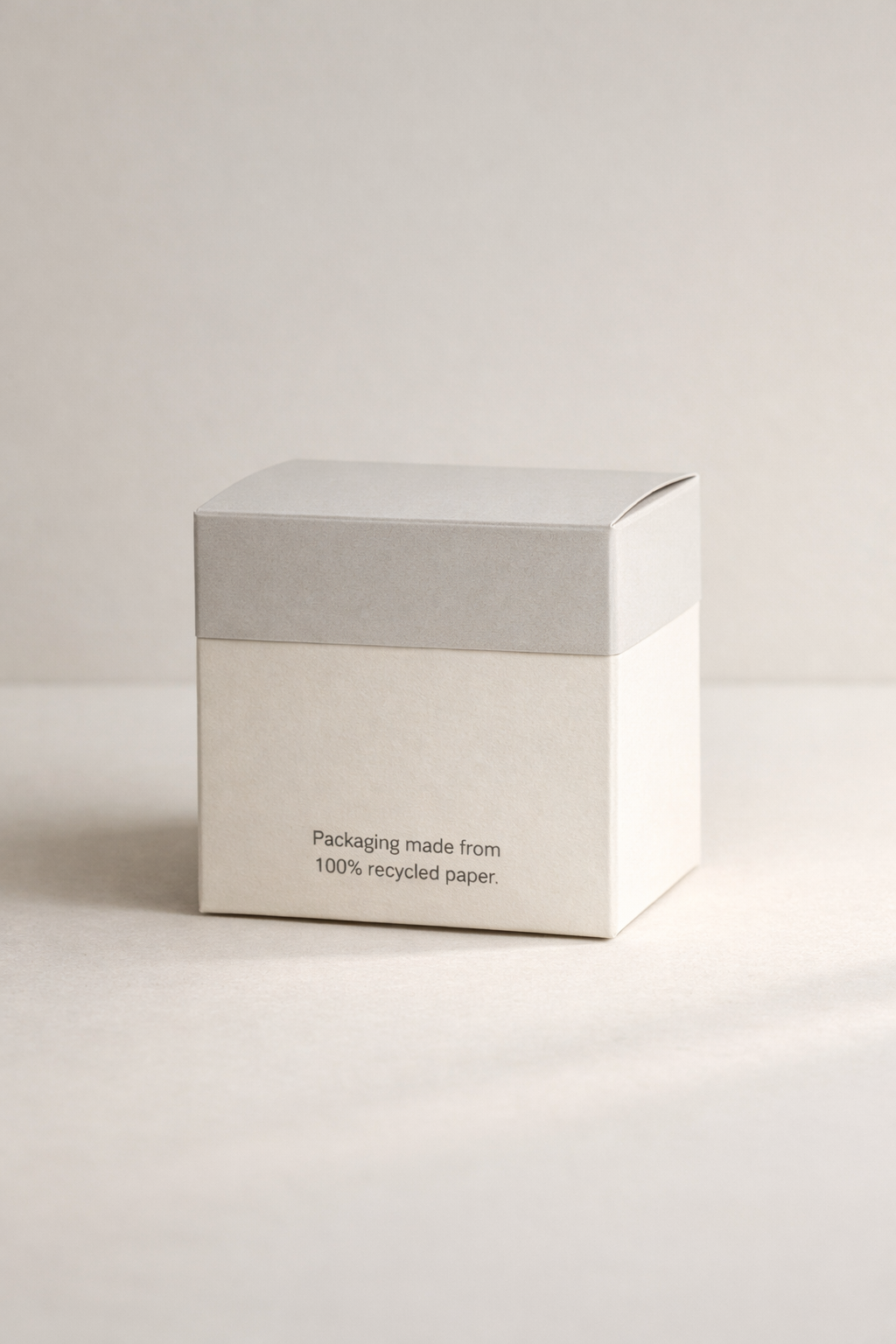
Against this backdrop, proof-first communication is often misunderstood as minimalist or defensive.
A proof-first claim is narrow by design. It does not attempt to summarize a brand’s entire sustainability strategy. Instead, it communicates one improvement that can be clearly explained, independently verified, and sustained over time.
This shift changes the role of packaging language. Instead of persuading through values, packaging increasingly signals operational decisions: material choices, structural simplifications, recyclability outcomes, or efficiency gains.
The key distinction is that proof-first claims do not ask for trust. They offer reference points.
One of the most consistent findings across recent packaging and consumer-behavior research is not rejection of sustainability, but rejection of overstatement.
Large surveys repeatedly show that willingness to pay more for sustainable packaging exists, but it is uneven. A smaller segment of consumers will pay substantially more. A much larger group supports sustainability only when it does not feel abstract, expensive, or performative. This segmentation is especially visible among younger consumers.
Gen Z is often described as more sustainability-oriented, which is broadly true. At the same time, Gen Z is also more price-sensitive, more research-driven, and more comfortable validating claims independently. Across markets, the dominant behavioral pattern is not impulse buying, but intentional spend.
This is why broad sustainability language increasingly underperforms at the point of purchase. Consumers are not rejecting sustainability; they are rejecting uncertainty. When claims are vague, the mental cost of evaluating them outweighs the perceived benefit. Proof-first claims reduce that friction by making decisions legible: either the improvement is relevant, or it is not.
Proof-first communication aligns with this behavior by reducing cognitive load. Instead of asking consumers to believe a narrative, it allows them to quickly assess whether a change matters to them.
This same logic carries directly into how sustainability is framed in 2026.
Sustainability language moves away from moral framing and toward value framing. This does not mean sustainability becomes cynical or purely cost-driven. It means it is increasingly described in the same terms as other design decisions: performance, efficiency, and long-term viability.
Internally, this shift reflects how sustainability decisions are increasingly justified. Material reduction, structural simplification, and recyclability improvements are evaluated using the same criteria as other operational changes: cost exposure, regulatory risk, and long-term efficiency. When sustainability decisions are made through this lens, marketing language inevitably follows. Proof-first claims are simply the external expression of this internal economic logic.
Instead of positioning sustainability as something brands do for the planet, packaging increasingly presents it as something brands do because it works better. This reframing resonates because it reflects how sustainability decisions are actually made inside organizations, rarely as isolated ethical choices, but as responses to cost pressure, regulation, and supply-chain constraints.
The economic logic behind proof-first claims becomes unavoidable once regulation is factored in.
In the UK, Extended Producer Responsibility frameworks begin applying eco-modulated fees from 2026 onward. Packaging that is easier to recycle, lighter, or structurally simpler is increasingly associated with lower costs. Similar mechanisms are already visible across EU markets and beyond.
This fundamentally changes the role of sustainability communication. Improvements are no longer only reputational. They affect unit economics.
As a result, brands increasingly communicate sustainability changes not as abstract responsibility, but as smart design decisions that reduce complexity, risk, and long-term cost exposure. Proof-first claims allow brands to externalize these internal decisions without exaggeration.
The result is a reversal of roles. Regulation no longer reacts to marketing claims; marketing increasingly anticipates regulation. Brands that communicate in proof-first terms signal not only responsibility, but preparedness - an advantage that becomes visible long before it becomes mandatory.
The same demand for defensibility reshapes how packaging itself is used as a communication surface.
Modern consumers do not read packaging closely. They scan it, interpret it, and decide whether to engage further. Proof-first packaging is designed around this behavior. It uses packaging as an index, a pointer to verifiable information, rather than as a complete explanation.
QR codes, standardized recycling instructions, and simple numeric statements allow packaging to remain visually calm while still offering depth for those who want it. This structure also aligns with AI-mediated environments, where specific, factual statements are easier to surface than vague claims.
What often appears as minimalist design in 2026 packaging is frequently the result of claim reduction.
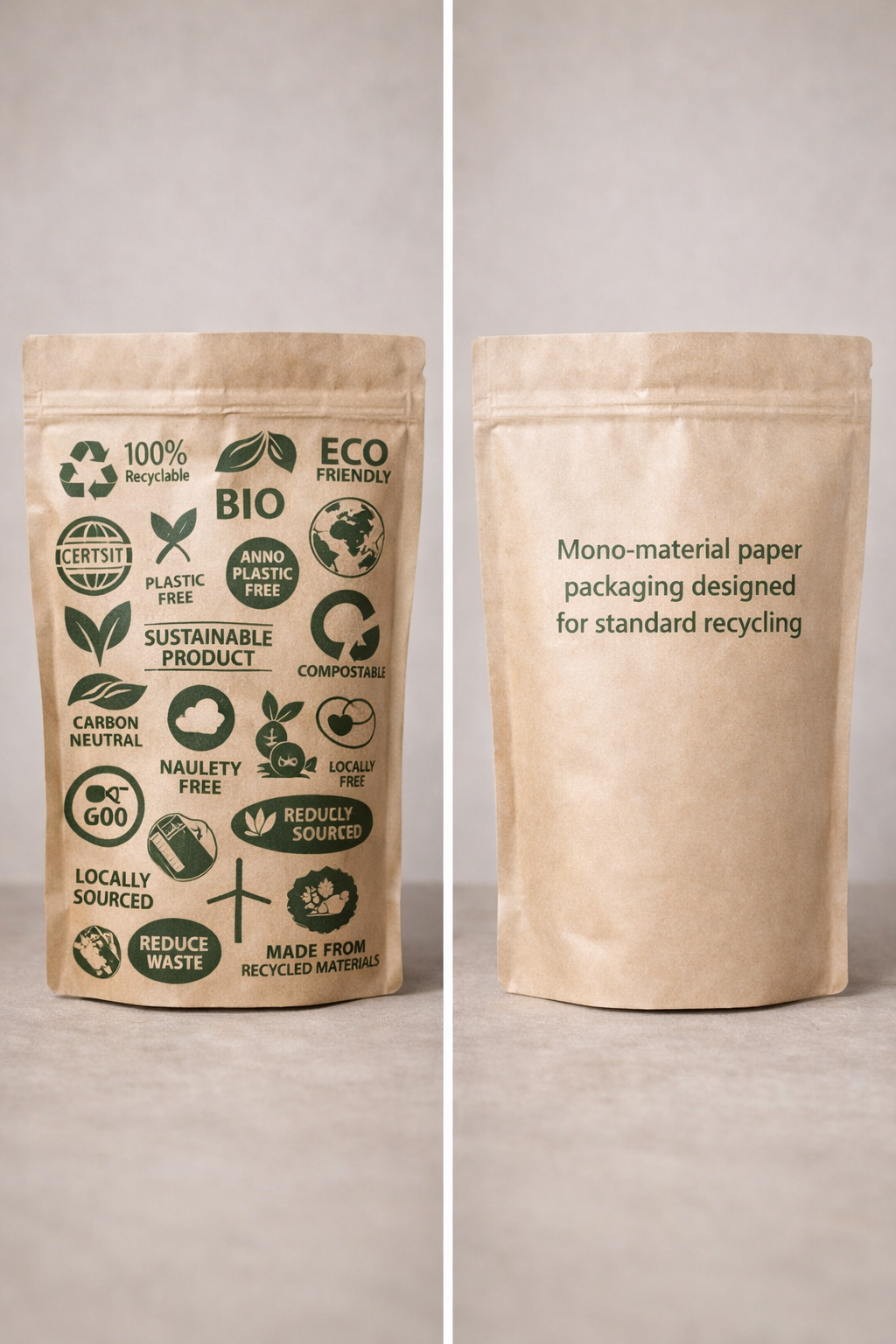
Design teams increasingly remove sustainability language not because it is unimportant, but because excess language weakens credibility. Every additional claim introduces uncertainty. Every icon invites scrutiny.
By contrast, a single, well-supported statement can carry more weight than an entire cluster of symbols. This approach also ages better. Broad sustainability promises are vulnerable to shifting standards and expectations. Specific improvements remain true even as regulatory definitions evolve.
Perhaps the most consequential shift behind proof-first packaging is invisible to consumers.
Sustainability increasingly affects packaging fees, logistics efficiency, and regulatory exposure. It becomes part of cost management rather than brand ornamentation. When sustainability decisions are made for economic reasons, marketing language adapts. Brands begin to talk about optimization, simplification, and future-readiness rather than virtue.
This is not a dilution of sustainability. It is its integration into core business logic.
Contrary to early assumptions, proof-first claims do not reduce emotional connection. They reduce friction.
Clear, restrained communication builds trust faster, reduces post-purchase doubt, and supports repeat-purchase behavior. Over time, credibility compounds. Brands that consistently communicate verifiable improvements build reputations for seriousness rather than spectacle.
In saturated markets, this restraint becomes a differentiator.
We regularly update this FAQ to reflect regulatory developments and market behavior.
What makes a claim “proof-first”?
A proof-first claim is specific, verifiable, and limited in scope. It focuses on one measurable improvement rather than broad sustainability narratives.
Is proof-first communication only about avoiding greenwashing?
No. While it reduces risk, it also improves clarity, trust, and conversion by aligning sustainability with performance and value.
Do consumers still respond to sustainability messaging?
Yes, but they respond better to concrete information than abstract promises, especially in price-sensitive segments.
Should brands remove sustainability language entirely?
Not necessarily. The trend is toward reduction and precision, not silence.
In 2026, sustainability is no longer communicated through volume or virtue. It is communicated through proof, restraint, and relevance.
In environments shaped by AI summaries, regulatory audits, and value-conscious consumers, excess language becomes a liability. Precision becomes the signal. Proof-first packaging does not simplify sustainability; it operationalizes it, making credibility scalable rather than performative.
What looks like sustainable design increasingly looks like smart design, because the two are becoming inseparable. Brands that understand this shift will not only avoid greenwashing, they will communicate sustainability in a way that actually works.
Last updated: January 2026
SOURCES:
(1)https://ec.europa.eu/commission/presscorner/detail/en/ip_23_1661
(3)https://www.swiftpak.co.uk/insights/uk-packaging-epr-updates-2026-swiftpak-guide
(6)https://www.valpak.co.uk/compliance/packaging-compliance/
.svg)


