
Packaging Marketing & Design Trends 2026 - An AI-Informed Analysis by Inuru
Recyclable-by-design packaging is packaging intentionally engineered to be easy to sort, recycle, or reuse without confusion. This article explains why structural and visual simplification becomes the 2026 default, how simplicity reshapes trust and usability, and how brands can simplify packaging without losing visibility or brand nuance.
Packaging in 2026 is shaped less by trends and more by constraints. Regulation, economics, digital commerce, and changing consumer behavior converge to redefine what effective packaging looks like and how it is judged.
This series analyzes the most important packaging marketing and design shifts shaping 2026. Each article focuses on one structural change, explains why it emerges now, and shows how it affects brand visibility, trust, and performance across shelf, screen, and home.
Rather than predicting styles, the series explains why certain packaging decisions outperform others and how brands can adapt without losing differentiation.
Packaging does not change because designers seek novelty. It changes when the system around it stops tolerating friction.
In 2026, that friction becomes impossible to ignore. European regulation tightens expectations around waste prevention and recyclability. Cost structures begin to penalize unnecessary complexity. Retailers and platforms demand clearer labeling and more predictable disposal behavior. Consumers, meanwhile, grow impatient with packaging that feels overbuilt, confusing, or performative.
None of these forces are new on their own. What makes 2026 different is that they finally align. Instead of pulling packaging in different directions, they converge around the same outcome.
Together, they push packaging toward simplicity that is not cosmetic, but structural. This is the point where recyclable-by-design packaging moves from a sustainability ambition into a market baseline.
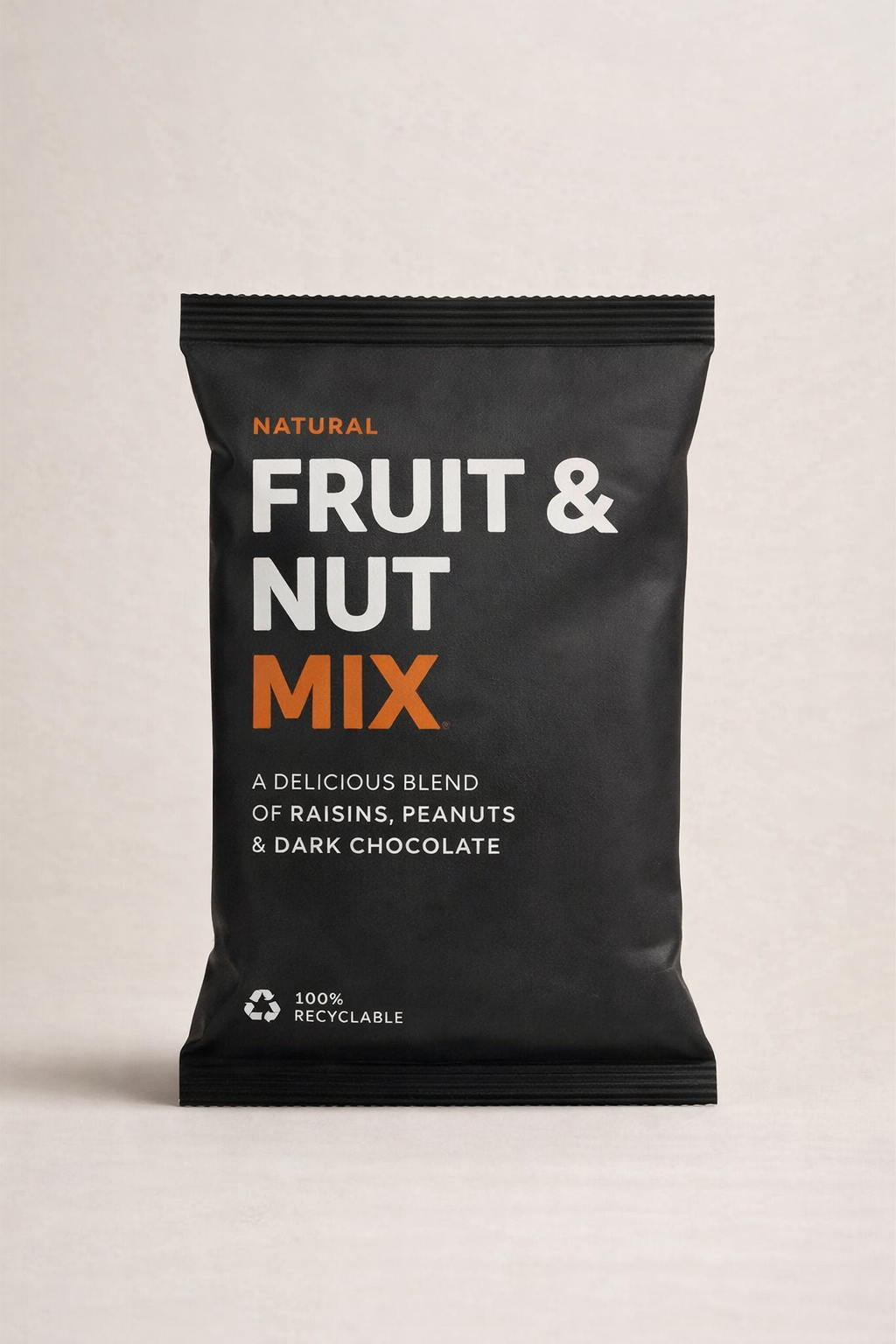
Simplification concentrates identity rather than removing it. In recyclable-by-design packaging, typography, hierarchy, and a small number of deliberate signals carry brand recognition when structure and materials are reduced.
Recyclable-by-design packaging is not defined by what it claims. It is defined by what it makes obvious.
In practice, recyclable-by-design packaging is conceived from the start to align with real recycling systems and real consumer behavior. Material choices are limited and logical. Components are either easy to separate or intentionally unified. The disposal pathway is legible without reading instructions.
When a consumer has to pause and interpret the packaging, the design has already introduced friction.
This is why recyclable-by-design packaging naturally leads to simplification. Complexity does not only create waste. It creates hesitation and hesitation undermines both compliance and trust.
The strongest acceleration of recyclable-by-design packaging in 2026 comes from regulation, particularly in Europe.
EU communication around the Packaging and Packaging Waste Regulation emphasizes preventing unnecessary packaging, enabling reuse, refill, and recycling, and making labeling clearer for consumers. While framed as policy objectives, their impact is practical and immediate: recyclability becomes a design constraint, not a post-use consideration.
Packaging that relies on multiple materials, decorative layers, or complex assemblies becomes harder to explain, harder to label clearly, and harder to justify. The more complex the packaging, the more information it demands and the more likely it is to fail both regulatory scrutiny and consumer understanding.
As a result, brands simplify not because minimalism is fashionable, but because clarity is becoming mandatory.
Once packaging becomes simpler, something unexpected happens.
Brands no longer need to argue sustainability in detail. Fewer materials, clearer structures, and obvious disposal logic communicate improvement without language. This reduces reliance on vague “eco” claims and shifts communication toward fewer, more auditable statements or removes claims entirely.
Trust in 2026 is increasingly built silently. Consumers may not consciously analyze packaging decisions, but they feel the difference between packaging that respects their time and packaging that demands interpretation.
At this point, recyclable-by-design packaging stops being only about compliance. It becomes a marketing advantage.
The effects of recyclable-by-design packaging are cumulative. They appear at every stage of the consumer journey.
On shelf, simplified packaging is faster to read. Reduced visual noise improves recognition and comprehension, especially in crowded retail environments and digital thumbnails where packaging is viewed at small sizes.
At home, simplified structures improve usability. Packaging that opens cleanly, pours predictably, reseals reliably, and stores efficiently feels like a functional upgrade rather than a sustainability compromise.
At disposal, recyclable-by-design packaging removes hesitation. The correct action feels self-evident. The consumer does not need to decode symbols or instructions.
Each of these moments reinforces brand perception. In 2026, packaging that removes friction is remembered positively even when consumers cannot articulate why.
Beyond regulation and perception, recyclable-by-design packaging follows a clear economic logic.
Eco-modulated EPR schemes increasingly link packaging design to cost. Packaging that is harder to recycle or unnecessarily complex carries higher fees. Over time, these costs compound and influence margin decisions at scale.
At the same time, simplified packaging structures often reduce material usage, logistics inefficiencies, damage rates, and operational complexity. Recyclable-by-design packaging is not always cheaper but complexity becomes harder to defend financially unless it delivers clear functional or brand value.
In 2026, smart packaging design is judged as much by unit economics as by appearance.
Despite its advantages, recyclable-by-design packaging introduces a critical risk that becomes more visible as adoption increases.
As more brands simplify in similar ways: fewer materials, reduced ink coverage, cleaner layouts, packaging begins to converge visually. What once signaled restraint and intelligence starts to feel generic. Simplicity, when applied uniformly, loses its power to differentiate.
Many brands fall into the same trap. They simplify structure and visuals at the same time, removing not only waste but also identity. Logos shrink. Color disappears. Hierarchy flattens. The packaging becomes correct, compliant, and easy to recycle but difficult to remember.
In competitive categories, forgettable packaging is often worse than inefficient packaging. This is the central tension of recyclable-by-design packaging in 2026: how to reduce complexity without erasing distinction.
The brands that succeed in 2026 approach simplification differently. For them, simplification is not primarily about removing elements. It is about deciding what deserves to carry the brand.
Instead of asking “what can we remove?”, they ask a more strategic question: “what must remain unmistakable for this packaging to still be recognized?” That shift changes how simplification is applied.
Successful recyclable-by-design packaging simplifies around identity rather than stripping it away. Structure is reduced, but brand signals are intensified. Noise disappears, but meaning becomes sharper.
In practice, this means brands deliberately choose a small number of elements to carry recognition. Often, this role is taken by typography. In other cases, it is a confident color field, a distinctive proportion, or a single graphic gesture repeated consistently across formats. Everything else is removed to give those elements room to work.
Crucially, nuance is not eliminated, it is relocated. Rather than relying on many small cues, brands embed nuance into fewer, stronger decisions. A typographic system can express personality through weight, spacing, or imperfection. A single color can encode emotional tone more effectively than a broad palette. Even material choices can communicate quality without adding visual clutter.
This approach changes how packaging performs. Simplified packaging with strong anchors reads faster, translates better across physical and digital contexts, and scales more easily across product lines without dilution. In 2026, visibility does not come from adding elements. It comes from making fewer elements unavoidable.
One of the most common mistakes brands make is treating simplification as an automatic response to regulation.
Recyclable-by-design does not require packaging to look minimal. It requires packaging to be legible. Legibility depends on hierarchy, contrast, and clarity. It means knowing what the consumer should notice first and what can safely disappear. It means designing for speed rather than decoration.
In 2026, the strongest recyclable-by-design packaging often looks bold rather than quiet. It uses fewer elements, but those elements work harder.
The principles behind recyclable-by-design packaging existed before 2026. What changes is expectation.
Regulation, economics, and consumer behavior align closely enough that recyclable-by-design becomes the assumed default. Brands that resist the shift risk appearing outdated. Brands that adopt it carelessly risk disappearing.
The brands that win in 2026 are not the ones that simplify the most, but the ones that simplify with intent.
This FAQ section is updated regularly as new regulatory guidance, market data, and packaging best practices emerge.
What is recyclable-by-design packaging?
Recyclable-by-design packaging is packaging intentionally designed to be easy to sort, recycle, or reuse without confusion. It uses simple structures and clear material logic so consumers can dispose of it correctly without instructions.
Why does recyclable-by-design packaging matter in 2026?
In 2026, recyclable-by-design packaging matters because regulation, eco-modulated fees, and consumer expectations increasingly penalize unnecessary packaging complexity and unclear recyclability.
How is recyclable-by-design different from sustainable packaging?
Sustainable packaging often focuses on materials or claims. Recyclable-by-design focuses on how packaging behaves in real recycling systems, prioritizing structure, clarity, and ease of disposal.
Does simpler packaging reduce brand visibility?
Simpler packaging can reduce visibility if key brand signals are removed. Successful recyclable-by-design packaging simplifies structure while strengthening typography, color, or proportion to maintain recognition.
How can brands simplify packaging without losing brand nuance?
Brands preserve nuance by removing visual noise while amplifying a few strong brand anchors, such as distinctive typography or confident color use.
What role does EU packaging regulation play in recyclable-by-design packaging?
EU packaging regulation encourages preventing unnecessary packaging and clearer labeling, turning recyclability into a practical design requirement that favors simpler structures.
Last updated: January 2026
SOURCES:
(1)https://eur-lex.europa.eu/EN/legal-content/summary/packaging-and-packaging-waste-from-2026.html
(3)https://www.reloopplatform.org/ppwr/
(4)https://www.wrap.ngo/resources/guide/design-guidance-recyclability-household-rigid-plastic-packaging
(6)https://www.mdpi.com/2071-1050/11/16/4350
(7)https://www.packaging-gateway.com/features/packaging-trends-shaping-2026-and-beyond/?cf-view
(8)https://www.towardspackaging.com/insights/recycle-ready-packaging-market-sizing
.svg)


