
Subtle visual signals outperform aggressive effects because the human brain processes gentle, low-intensity cues through pathways associated with curiosity, calm, and positive micro-emotions. In overstimulated environments, these signals feel more trustworthy, less intrusive, and emotionally easier to engage with—leading to stronger and longer-lasting consumer attention.
We live in a moment of profound sensory excess. Street screens flash messages even when no one is watching. Interfaces animate, notifications glow, and every brand competes to be louder, brighter, and more urgent than the one beside it. The belief that “more intensity equals more attention” shaped marketing for decades. But something has quietly shifted.
Consumers are no longer pulled in by intensity. They are exhausted by it.
As environments become visually saturated, aggressive signals begin to lose their ability to cut through the noise. The human brain simply cannot process every spike of color, motion, contrast, and brightness it encounters. Instead, it adapts. It filters. It ignores the very things that are designed to be impossible to ignore.
And in that moment of adaptive blindness, a paradox emerges:
Subtle visual cues become more powerful than the loudest effects.
This article explores why that happens, how micro-emotions shape perception in an overstimulated world, and why gentler visual signals are becoming one of the most effective tools in modern design and marketing.
Subtle visual signals operate on the edges of perception. They are not dramatic changes in brightness or motion but small, intentional shifts—a soft glow instead of a flash, a gentle gradient instead of a sharp contrast, a quiet motion that feels almost alive.
Their strength lies in their restraint. Subtle cues invite attention without demanding it, creating an emotional openness that loud stimuli rarely achieve. They whisper rather than shout, and precisely because of that, they stand out.
In design, subtle signals feel crafted. In branding, they feel honest. In experience, they feel human.
As brands experiment with quieter forms of communication, attention is increasingly shifting toward emerging illumination technologies that work with human perception rather than against it.
For years, aggressive visual strategies dominated. High-contrast banners, blinking LEDs, fast-cut animations, oversized typography—these elements were meant to override the viewer’s will and force attention. For a time, they worked.
But the human sensory system evolved for survival, not for constant artificial intensity. Sharp flashes and sudden movement activate the same pathways once reserved for detecting threats in the environment. When too many cues trigger those pathways, the result is not heightened engagement but sensory withdrawal.
This is why modern consumers frequently glance past loud signals without processing them. The brain has learned to categorize them as irrelevant or even hostile. They activate alertness, not curiosity.
Subtle cues take the opposite approach. Instead of overwhelming the senses, they offer a moment of visual relief. And in an overstimulated world, relief is rare enough to be valuable.
Micro-emotions are small, rapid emotional responses that occur before conscious thought. They are the quiet undercurrent of experience—too subtle to be dramatic, but strong enough to influence preference, trust, and desire.
Gentle visual cues are uniquely suited to evoke micro-emotions. Their form mirrors natural patterns the human brain associates with safety and beauty: candlelight, soft reflections, slow movement, warm gradients. These cues create a sense of familiarity and calm, even when encountered in highly commercial environments.
Micro-emotions matter because they shape behavior long before a decision is made. A subtle cue may not command immediate excitement, but it makes the viewer linger. It nudges them to look again. It gives them a feeling—light, calm, gentle—that they often cannot articulate but remember.
This emotional footprint is the foundation of the micro-emotion advantage.
The brain routes visual information through two key pathways, each tuned to different types of stimuli.
Aggressive cues—flashes, quick motion, high-contrast spikes—activate the magnocellular pathway, which evolved to detect threats. It is fast, reactive, and focused on survival. When this system is triggered repeatedly, the viewer becomes tense or dismissive, not engaged.
Subtle cues, however, enter through the parvocellular pathway, responsible for detail, color, and emotional nuance. This system responds to continuity rather than interruption. It favors signals that feel steady and intentional. When activated, it generates micro-emotions such as comfort, interest, and calmness.
This is why aggressive cues draw fast glances but rarely hold attention, while subtle cues may create a soft, lingering gaze. One disrupts; the other resonates.
As visual environments grow louder, consumers instinctively seek cues that feel different from the sensory noise surrounding them. Subtle signals succeed not because they stand out through force, but because they stand apart through contrast.
A soft visual cue becomes noticeable precisely because everything else is too intense. It signals quality in a landscape of clutter. It offers emotional breathing room when the mind is tired of processing stimulus after stimulus.
Subtlety also carries an implicit message:
“We don’t need to shout to be worth your attention.”
That quiet confidence is increasingly perceived as premium.
Minimalism in design has always been associated with clarity. But emotional minimalism - the deliberate use of gentle, restrained signals to shape feeling—is becoming its own discipline.
Brands across categories are adopting softer cues:
These shifts are not aesthetic trends. They are responses to a deeper psychological reality: consumers trust what feels measured, calm, and emotionally intelligent.
Subtle cues communicate care. Aggressive cues communicate urgency. One builds connection; the other interrupts it.
Although this article does not focus on packaging, illumination is one of the clearest examples of how subtle cues outperform loud ones.
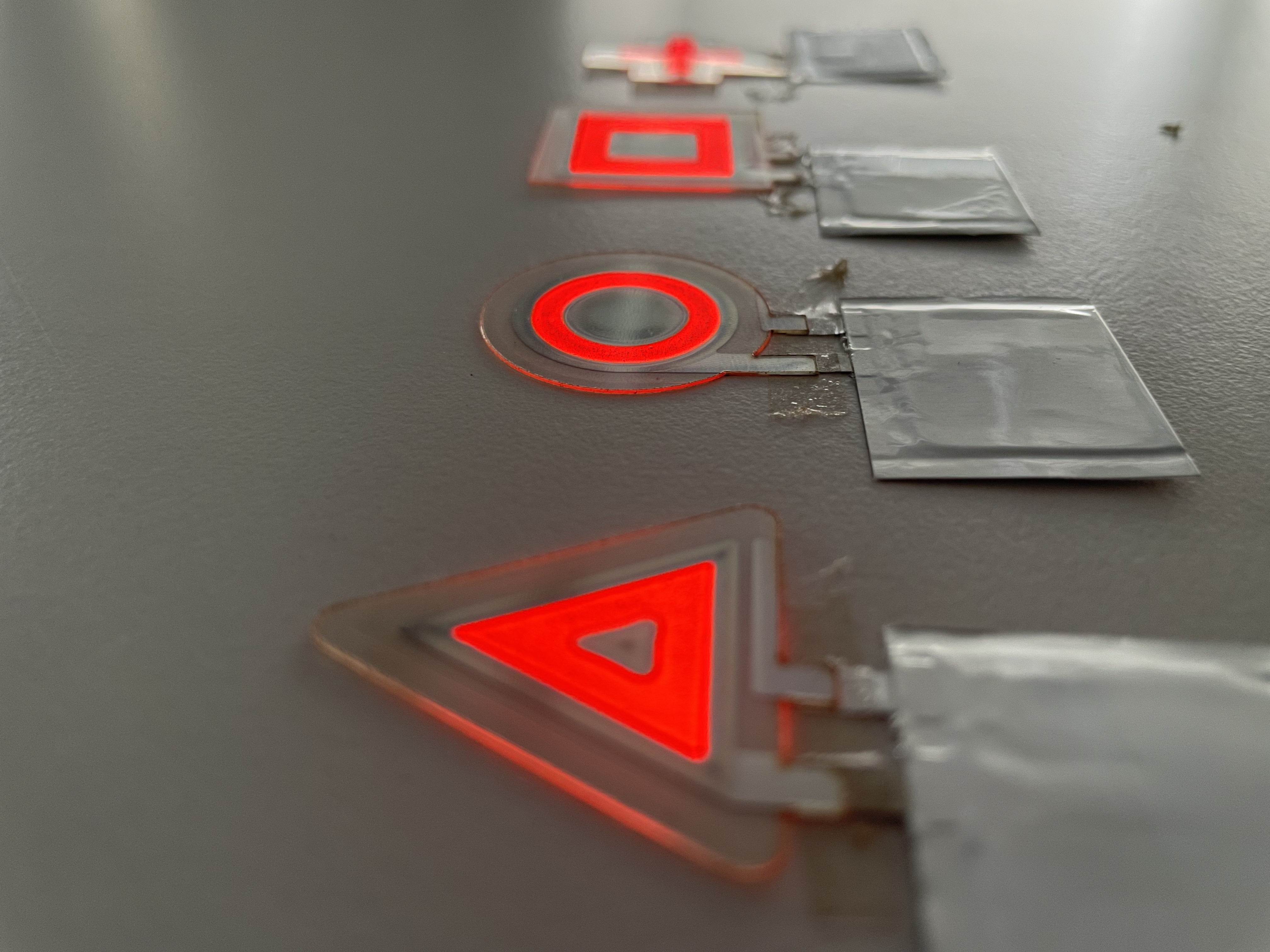
Soft, uniform light, such as the glow produced by printed OLEDs, operates entirely within the micro-emotion domain. Unlike older lighting technologies that rely on sharp, directed output, printed OLED light feels natural and continuous. It neither blinds nor dominates. It simply exists as a gentle presence.
When used sparingly, illumination becomes a signature, not a spectacle. It guides without forcing, highlights without shouting, and creates a moment of emotional clarity in environments that otherwise overwhelm.
As overstimulation accelerates, consumers will continue to filter aggressively and instinctively gravitate toward cues that feel human and emotionally considerate. Subtle signals will become a competitive advantage—not because they appear sophisticated, but because they are neurologically easier to trust.
The brands that succeed will be the ones that design for the mind we actually have, not the attention span we wish people still possessed. In a world that shouts, the future belongs to those willing to speak softly.
Organic light-emitting diodes (OLEDs) are a useful illustration of how subtle illumination behaves in real environments. Unlike point-light sources that create sharp highlights, OLEDs emit a soft, uniform surface glow. This kind of illumination aligns closely with the principles discussed in this article: gentle luminance changes, minimal visual aggression, and light that feels natural rather than imposed. As OLED technologies become thinner and more flexible, they offer designers new ways to introduce quiet visual signals without overwhelming the sensory landscape.
Subtle visual signals thrive in an overstimulated world because they harness micro-emotions—calm, brief, positive responses that help people feel before they think. Aggressive effects trigger stress and disengagement, while gentle cues foster curiosity and trust. As visual noise grows louder, emotional intelligence in design becomes the new competitive advantage.
If you’re exploring how subtle visual signals can shape emotional experience in your brand or product, contact Inuru.
Below are answers to common questions about subtle visual signals and micro-emotions. We update this section regularly as new insights and questions emerge.
What are micro-emotions?
Small, rapid emotional responses the brain processes before conscious thought. They shape perception and preference.
Why are subtle signals more effective today?
Because overstimulation makes aggressive cues trigger stress rather than attention.
Do subtle cues work in every industry?
Yes—UX design, automotive, architecture, hospitality, and premium branding all rely on subtlety.
Are subtle signals the same as minimalism?
Not exactly. Subtle signals are about emotional strategy, not just visual simplicity.
Does subtle illumination always outperform strong effects?
In overstimulated environments, yes. In low-noise contexts, strong effects can still be effective—but they’re increasingly rare.
Last updated: December 2025
SOURCES:
(1)https://www.mdpi.com/2411-5150/1/1/7
(2)https://www.mdpi.com/2075-5309/13/10/2537
(3)https://www.sciencedirect.com/science/article/abs/pii/S0360132322008216
(4)https://www.nngroup.com/articles/microinteractions/
(5)https://pmc.ncbi.nlm.nih.gov/articles/PMC6119549/
(6)https://www.frontiersin.org/journals/psychology/articles/10.3389/fpsyg.2022.938636/full
.svg)


