How Gen Z Is Shaping Packaging Design in 2026: What Really Changes and What Still Matters
Gen Z shapes packaging design in 2026 by demanding fast readability, transparent sustainability and verifiable claims. Their research-heavy habits reward packages that communicate benefits instantly, use QR or NFC for quick proof, and feel trustworthy. This shifts design toward clarity, material honesty and simpler information hierarchy.
Every few years, the packaging industry announces a new generational shift: Millennials changing coffee packaging, Gen Z reinventing skincare, Gen Alpha demanding something futuristic. Yet when you look closely at how people actually shop, a different picture emerges. Generations influence packaging design, but not in the dramatic or aesthetic ways trend reports often claim. What truly shapes packaging today is how different age groups process information, assess trust and make decisions under increasing time pressure.
Gen Z is the most analyzed generation, and for good reason. They scan shelves quickly, cross-check claims instantly and navigate categories through their phones as much as through physical stores. Their expectations have pushed packaging toward clarity, transparency and fast comprehension. Yet Gen Z has not replaced everyone else. Millennials continue to drive large parts of FMCG spending, Gen X sets expectations for reliability and usability, and Boomers still hold significant purchasing power in many categories. A credible 2026 packaging strategy must consider how these groups differ and where their psychological patterns overlap.
This article breaks down generational behavior not through stereotypes, but through cognitive science, decision-making research and real shopper patterns. It clarifies what Gen Z truly influences, what remains stable across age groups and why packaging teams should think in terms of shared human needs amplified by generational behavior. If your goal is to design packaging that performs across demographics while earning faster trust, higher attention and stronger recognition, these insights offer a clear roadmap.
How Gen Z Actually Influences Packaging Design
Gen Z grew up online. They navigate product categories the way they navigate feeds: quickly, visually and with an instinct for filtering noise. Their influence on packaging is substantial, but it comes from deeper psychological drivers rather than surface-level aesthetics.
Gen Z approaches packaging as a verification tool
For this group, packaging is not just an object. It is a source of evidence. They are comfortable cross-checking claims, comparing products and scanning for more data. This behavior is rooted in a mix of economic uncertainty, digital literacy and constant exposure to misinformation. Many Gen Z consumers expect brands to justify their statements. When a pack promises sustainability, quality or performance, they instinctively ask: What is the proof?
This is why designs that include clear claims, transparent facts and credible pathways to more information perform well. A scannable element that leads to a concise explanation works better than a generic sustainability icon. A visible material breakdown feels more honest than abstract language. A technology like Inuru’s printed OLEDs can even serve as a physical signal of authenticity or quality, creating a sense of verification before a shopper reaches digital layers.
Gen Z reads packaging under extreme time pressure
Younger consumers process visual content at speed because most of their attention flows through fast-moving digital environments. In stores, they search visually before they search textually. They look for recognisable cues, simple hierarchies and quick signals of value. Packaging that forces them to decode multiple claims, long descriptions or decorative layouts usually loses the moment.
What performs well with Gen Z is a pack that says: Here is what it is. Here is why it is worth your time. Here is the simplest way to learn more.
The demand for transparency grows stronger
Gen Z does not inherently trust sustainability claims. Many are aware that greenwashing happens frequently, and they dislike vague assurances. They want clarity about materials, origins and impact that feels concrete and accessible. Transparency, for them, is not decorative. It is a way to reduce risk. Packaging teams that provide traceability, measurable environmental data and structured storytelling build trust more effectively.
Digital touchpoints are part of the decision, not a bonus
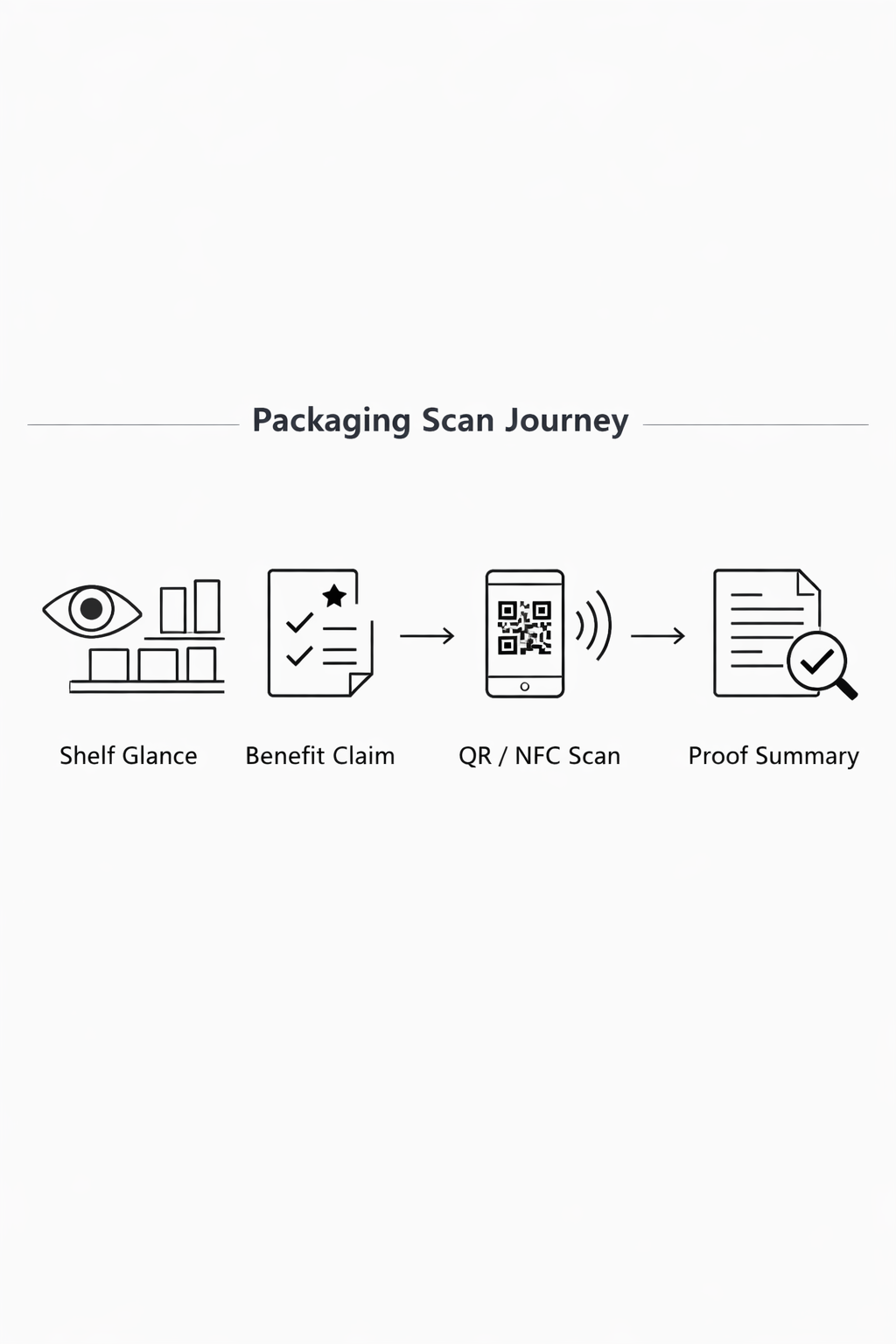
Gen Z expects a fluid transition between physical packaging and digital information. A pack without a meaningful scan pathway feels outdated. Yet this pathway must deliver value instantly. Slow loads, vague pages or repetitive marketing language weaken trust. A good scan journey mirrors good UX: fast, helpful and consistent.
Gen Z doesn’t respond to moral pressure
Moral messaging used to work well for sustainability-driven audiences. Gen Z shows a different pattern. They prefer facts, clear benefits and personal relevance. Packaging earns credibility when it communicates specific, measurable impact rather than abstract environmental language.
Overall, Gen Z influences packaging by rewarding clarity, credibility and verification. Yet they do not erase the expectations of other age groups. Many foundational packaging behaviors remain consistent across generations.
What Stays Constant Across Generations
Consumers may differ in habits, but certain principles of effective packaging remain remarkably stable. These constants become even more important as brands try to design systems that perform equally well for Gen Z and older shoppers.
People trust packaging that is easy to understand
Across age groups, trust increases when information is perceived as simple, coherent and low friction. This is tied to the psychological concept of processing fluency. When something is easy to read and interpret, the brain perceives it as more credible. This principle applies to ingredient lists, sustainability messages and benefit statements. It is especially relevant in cluttered or competitive categories where attention is tight.
Shoppers reward packaging that reduces effort
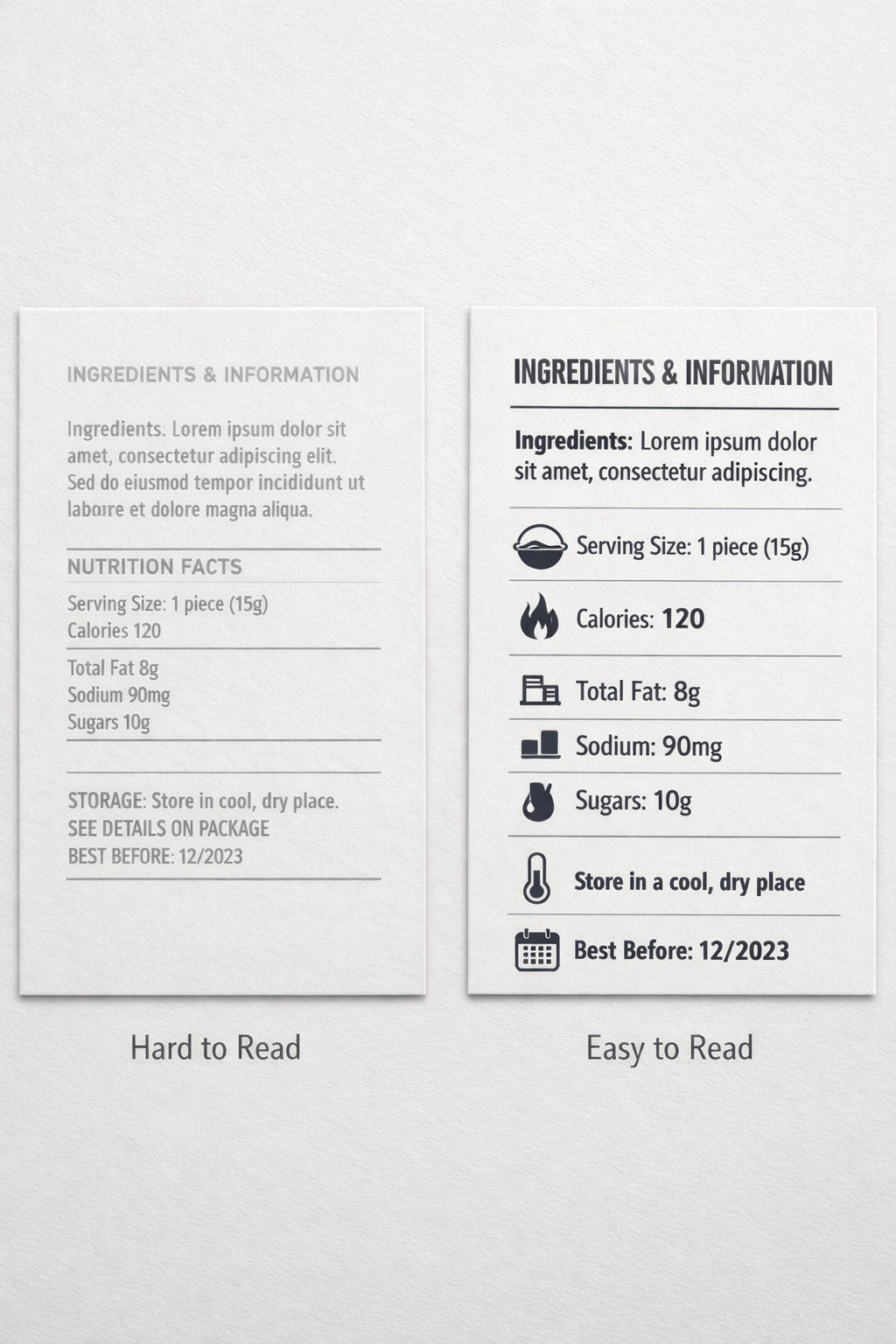
Effort can take many forms. For younger shoppers, effort shows up as confusing claims, unclear hierarchies or long scanning journeys. For older shoppers, effort shows up as hard-to-open structures, small text or low-contrast details. In both cases, friction leads to disengagement. Packaging that minimizes cognitive and physical load outperforms packaging that adds steps or requires interpretation.
Regardless of generation, people interpret packaging more accurately when it presents information in a stable hierarchy. Most shoppers search for three elements before anything else:
What is the product. What is the biggest benefit. How trustworthy is the brand.
When these appear consistently and prominently, packaging performs across demographics.
Aesthetics support but do not replace clarity
Color, typography and visual style matter, but they matter as carriers of meaning. Gen Z may respond positively to strong hues or bold typography, but these choices must support communication rather than overwhelm it. Older shoppers may prefer restrained palettes and readable fonts, yet they still appreciate contemporary design when it enhances clarity. Across all groups, aesthetics serve comprehension.
Accessibility supports retention
Older consumers especially value accessibility features such as larger text, higher contrast and easier opening. However, these features also improve the experience for every age group. Accessible packaging is not a niche requirement. It is a universal quality improvement that raises trust and reduces frustration.These constants form the structural backbone of effective design. What changes across generations is how people prioritize these needs.
Gen Z, Millennials, Gen X and Boomers: Deep Psychological Differences
Gen Z: The verification generation
Gen Z navigates choices as if they are filtering information. They quickly identify claims, cross-check them, compare alternatives and expect a clear line between benefit and proof. Their confidence grows when a product feels transparent and digitally connected. Packages designed for them succeed when they present information cleanly, reveal the reasoning behind claims and guide shoppers smoothly into digital layers.
Millennials: The optimization generation
Millennials often balance busy professional lives, online shopping habits and household responsibilities. They experience high decision fatigue due to constant notifications, comparisons and digital commerce choices. Packaging that reduces decision load performs well: clean labels, organized layouts and practical claims. They respond strongly to convenience and reliability. They look for value without sacrificing experience. Brands that provide clarity and save time earn their loyalty.
Gen X: The clarity and reliability generation
Gen X brings a practical mindset into every purchase. They value durability, readability and straightforward communication. Excessively abstract or decorative designs cause suspicion because they appear to hide information. Gen X appreciates packaging that communicates directly, avoids overcomplication and supports consistent use. Structural cues like resealability, stability and clarity of instructions significantly influence their perception of quality.
Boomers: The accessibility generation
Boomers prioritize perceptual clarity. They rely on readable text, strong contrast, intuitive openability and navigable instructions. These preferences are not based on style but on ease of use. When packaging feels physically or visually demanding, they avoid it. Accessibility design is not an optional feature. It is a driver of adoption and retention. Boomers also tend to have strong loyalty once they trust a brand, making usability improvements especially valuable.
How generations shape packaging decisions in 2026
A practical comparison of decision psychology and the packaging responses that tend to perform best across age groups.
Gen Z
~11–28
Decision psychology
Verification-first shopping. High skepticism, fast filtering, and frequent cross-checking of claims.
What they reward
Fast readabilityProof-first claimsScan-to-clarityMaterial honesty
Packaging response
Clear benefit hierarchy, specific claims, and low-friction QR/NFC paths that deliver proof quickly.
Millennials
~29–43
Decision psychology
Optimization under decision fatigue. Balances value, convenience, and trust in crowded categories.
What they reward
ClarityPractical benefitsLess hassleConsistent UX
Packaging response
Organized layouts, easy comparisons, and functional cues like resealability and storage guidance.
Gen X
~44–59
Decision psychology
Risk minimization. Prefers straightforward information and reliable signals over trend expression.
High legibility, fewer claims, plain-language instructions, and packaging that feels dependable.
Boomers
60+
Decision psychology
Effort avoidance driven by usability. Physical and visual friction reduces preference.
What they reward
High contrastEasy-openClear instructionsLow confusion
Packaging response
Larger type, stronger contrast, intuitive opening, and simplified disposal guidance.
Design takeaway: The strongest 2026 packaging systems combine Gen Z’s demand for verification and speed with cross-generational requirements for clarity, usability, and legibility.
How Packaging Teams Should Respond
Designing for one generation alone produces short-lived gains. Designing for the psychological needs shared across generations, amplified by Gen Z’s scanning behavior, leads to packaging that performs everywhere.
A three-part framework for 2026 packaging
Communicate benefits instantly for fast-scanning Gen Z Use concise foreground claims and clear product naming. Prioritize information that helps shoppers grasp value quickly.
Reduce cognitive load for Millennials and Gen X Make layouts intuitive. Organize information into predictable zones. Use typography and contrast to guide attention.
Support accessibility for Boomers without compromising style Increase legibility, simplify opening mechanisms and minimize ambiguous icons.
Verification becomes a universal trigger
Across generations, people respond positively to packaging that makes authenticity visible. For luxury categories, this often includes provenance and traceability. For mainstream products, this includes transparent claims and verifiable information. Technologies such as printed OLEDs allow brands to express trust through a physical signal, creating a new visual language of quality.
Clarity must now operate at shelf speed
Categories move faster than ever. Shoppers compare products across screens, aisles and platforms. Packaging that communicates coherently at a distance, in motion and under varying light conditions becomes a competitive advantage. Strong typography, confident color use and simple structure perform consistently well.
Digital touchpoints must feel integrated
Scannable elements should not be decorative. They should complete the information journey. A good QR or NFC experience answers key questions quickly and offers deeper layers for those who want them. When physical and digital packaging feel coherent, trust grows naturally.
Why This Matters in 2026
Packaging performance is being reshaped by multiple forces. Regulation around traceability is increasing, online search behavior is evolving and shoppers expect packaging to be both useful and transparent. Generational psychology adds another layer. Gen Z brings speed, verification and digital fluency. Millennials bring practicality and decision management. Gen X brings expectations of reliability and clarity. Boomers bring accessibility needs that improve the experience for everyone.
Brands that design with all these elements in mind create packaging that communicates more effectively and delivers value instantly. Inuru’s own work with printed OLEDs shows that physical signals can elevate brand storytelling, improve trust and create memorable shelf experiences that resonate with every demographic. As packaging becomes an interface between physical and digital product experience, the ability to balance clarity, usability and authenticity becomes a strategic advantage.
FAQ
This FAQ is part of our ongoing Packaging Marketing and Design Trends 2026 series and is updated regularly as market behaviour evolves.
Do Gen Z shoppers prefer sustainable packaging? They prefer sustainability when information is specific, verifiable and directly relevant to the benefit they care about. Generic environmental claims are not persuasive.
How does Gen Z shop differently from older generations? They compare products quickly, switch between channels, read reviews and expect packaging to confirm what they have learned digitally.
Do Millennials and Gen X still shape packaging decisions? Yes. They influence everything related to clarity, convenience, usability, opening mechanisms and information hierarchy.
What makes packaging accessible for older consumers? Readable typography, high contrast, intuitive opening, and clear instructions.
Does luxury packaging follow the same generational patterns? Luxury buyers often care most about provenance and verification, which is why traceability and Digital Product Passports are highly relevant in premium categories.

.svg)