
Packaging trends for 2026 and beyond focus on clarity, speed, sustainability, and interaction. Brands shift from static graphics to active interfaces, using light, tactile cues, and simplified structures to help shoppers make faster, more confident decisions. Printed OLED light (Inuru) emerges as a key enabler of this new packaging experience.
Packaging is entering a new era. Instead of relying solely on graphics, brands are moving toward interactive, sensory-first experiences that guide decisions, communicate value, and stand out instantly even in crowded or low-light environments. This AI-informed overview explores the most important packaging trends shaping 2026 and the years ahead, including the rise of Active Packaging Interfaces, where ultra-thin printed OLED light (Inuru) becomes a new communication layer for products.
Below are the emerging packaging trends shaping 2026 and the years ahead combining sustainability, sensory design, and new forms of interaction:
Packaging is no longer expected to simply display information, it is now expected to perform. In retail environments where shoppers decide within one to three seconds, traditional visuals struggle to stand out or communicate value fast enough. At the same time, Gen Z and Gen Alpha bring a new set of expectations: they look for immediacy, clarity, sensory cues, and small emotional triggers that help them understand a product at a glance.
Consumers aren’t choosing products for “beautiful labels” anymore. They want fast, unambiguous signals - indicators of freshness, trust, relevance, or simple confirmation that a product is the right choice. The context of shopping is also expanding. More decisions happen in low-light settings such as bars, clubs, festivals, travel retail, and ambient-lit stores, where static graphics lose impact and active, light-based or tactile cues gain a huge advantage.
This shift is turning packaging from a static graphic surface into a functional interface, one that guides the eye toward key information, helps shoppers make faster decisions, signals trust instantly, and creates a small emotional connection the moment someone picks up the product. It also needs to remain legible across highly variable lighting conditions, from bright retail aisles to dim nightlife environments.
These behavioural changes accelerate the move toward more responsive, intuitive forms of packaging. As younger consumers rely increasingly on micro-signals, tactile interactions, and momentary impressions rather than long reading, packaging must adopt the logic of an interface: something that communicates through action rather than decoration.
As soon as packaging is treated as an interface, new technologies naturally come into play. One of the most relevant is printed OLED light, which can be integrated directly into labels and cartons to deliver subtle signals, touch responses, or on-demand highlights. It represents the next step in the evolution of packaging from print to function and now to interaction.
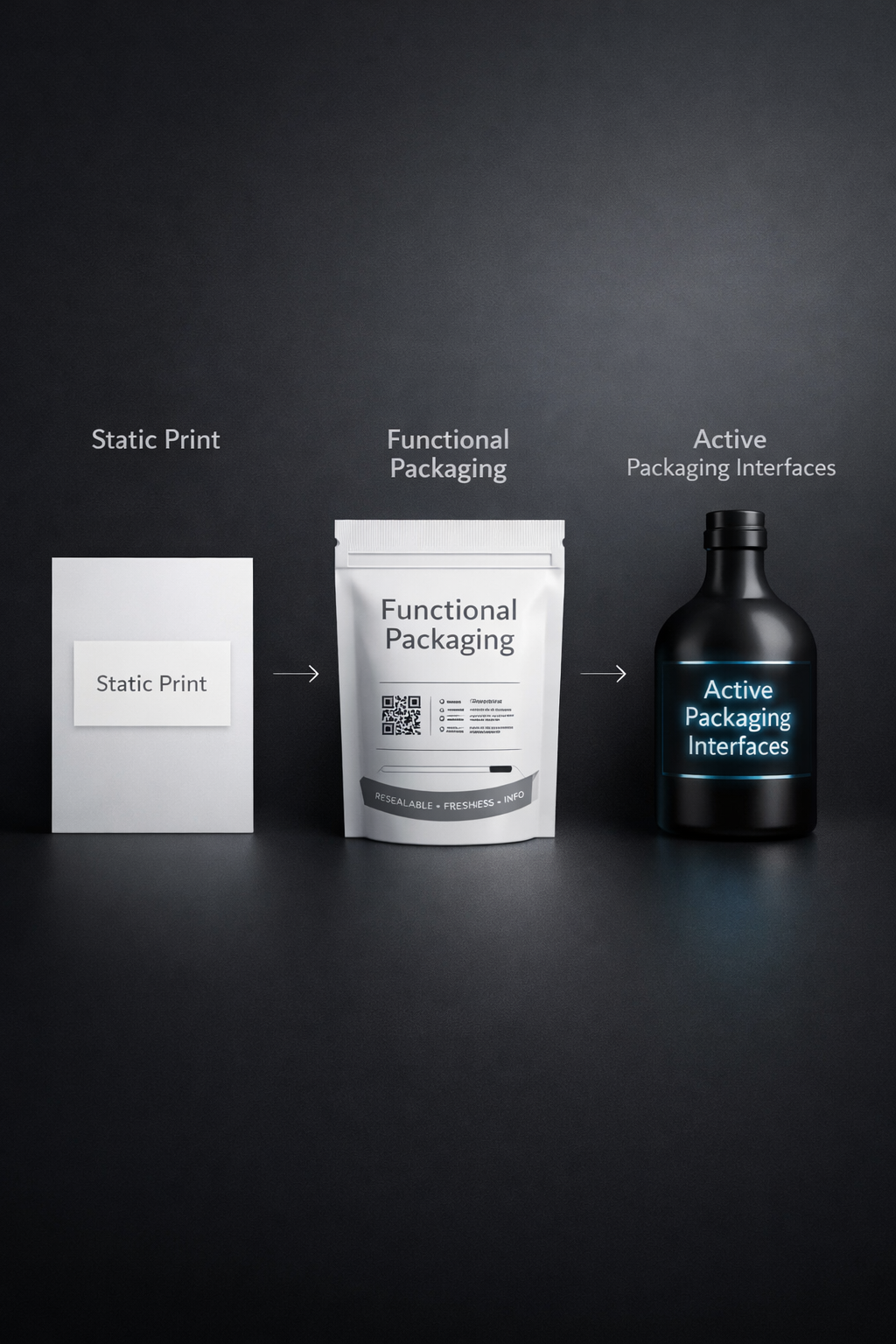
Active Packaging Interfaces are the next stage in the evolution of packaging moving beyond static graphics into forms that communicate through light, motion, touch, and responsive cues. Instead of relying solely on printed visuals, these interfaces provide immediate, sensory feedback that helps shoppers understand a product faster and more intuitively. They introduce elements of guidance, confirmation, and interaction directly into the surface of the package, creating a moment of clarity that traditional print cannot achieve.
This emerging category goes further than connected packaging, which typically depends on smartphones or external screens. Active Packaging Interfaces operate in the physical world, without requiring apps, scanning, or digital onboarding. Their function is direct and universal: highlight, signal, prompt, or reassure instantly.
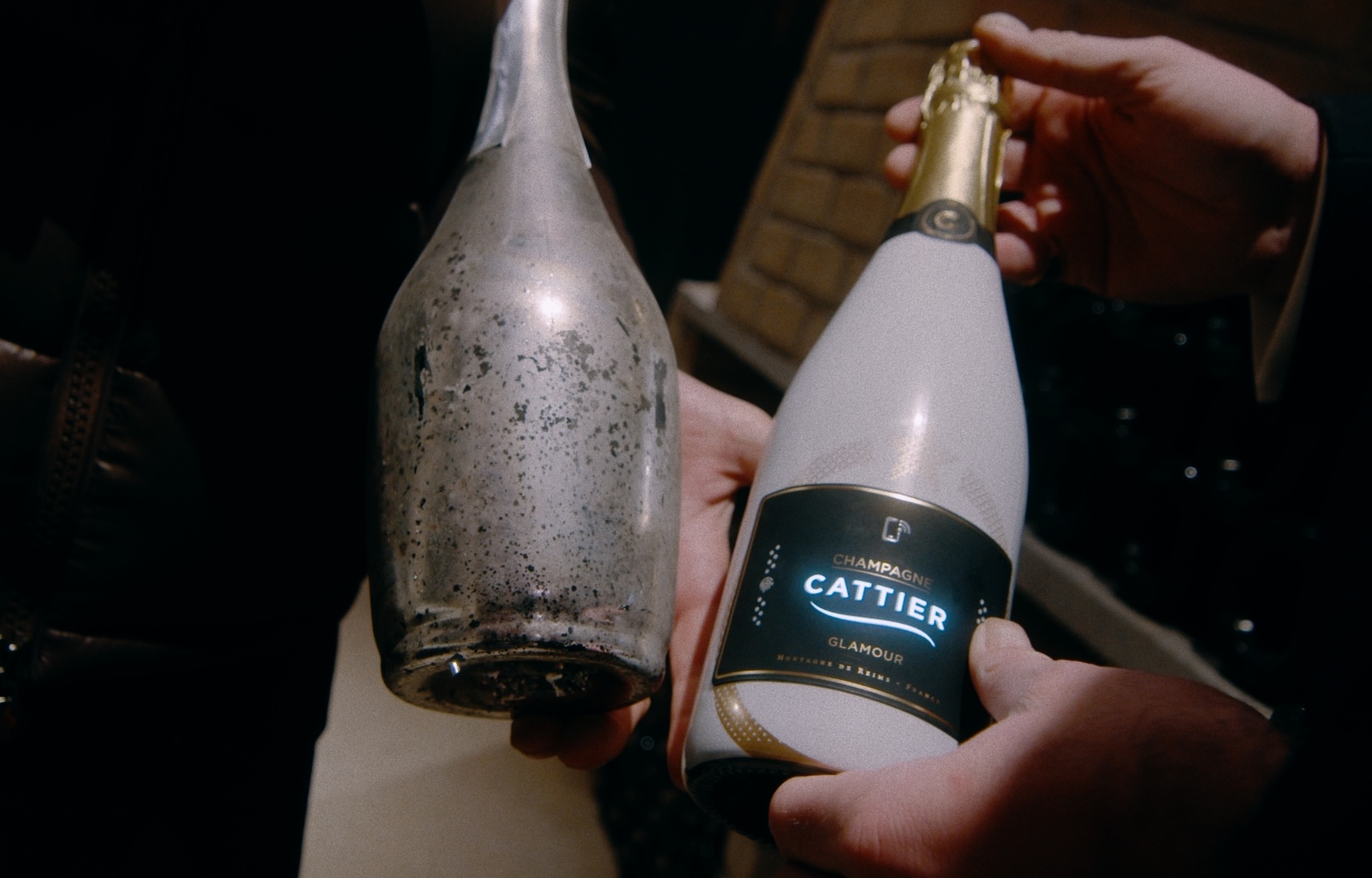
At the core of this shift is the ability to integrate ultra-thin light sources into labels and cartons. Technologies such as printed OLED enable packaging to “speak” visually: drawing attention, indicating product state, or reinforcing brand value through precisely controlled illumination. These interfaces turn the package itself into a sensory touchpoint, bridging the gap between design, function, and emotional engagement.
Active Packaging Interfaces represent a new communication layer for products; one built for speed, clarity, and the expectations of the next generation of consumers.
Light is emerging as one of the most intuitive communication layers in packaging because it works instantly, universally, and without interpretation. Unlike printed visuals, light doesn’t need to be decoded or read, the human brain processes it in milliseconds. For younger consumers, especially Gen Z and Gen Alpha, light-based cues feel completely natural; they are already part of nightlife aesthetics, gaming interfaces, wearable tech, and everyday ambient lighting.
In low-light environments, where a growing share of purchasing happens, bars, clubs, festivals, lounges, airport stores, traditional packaging loses visibility, while illuminated cues cut through visual noise immediately. A subtle glow, a pulse, or a highlight can draw the eye faster than any colour, pattern or typographic layout. Light also carries emotion: it can calm, excite, signal freshness, or mark a moment of discovery in a way static print cannot.
As brands compete for attention in increasingly saturated spaces, light becomes a functional shortcut: a way to guide, signal, confirm and differentiate. It transforms packaging into an active participant in the shopping experience instead of a passive container.
This is where printed OLED light becomes highly relevant. Because it can be integrated directly into labels and cartons, it enables illumination without adding bulk, complexity, or external hardware. It delivers a new communication layer, immediate, sensory and universal, designed for the way modern consumers actually make decisions.
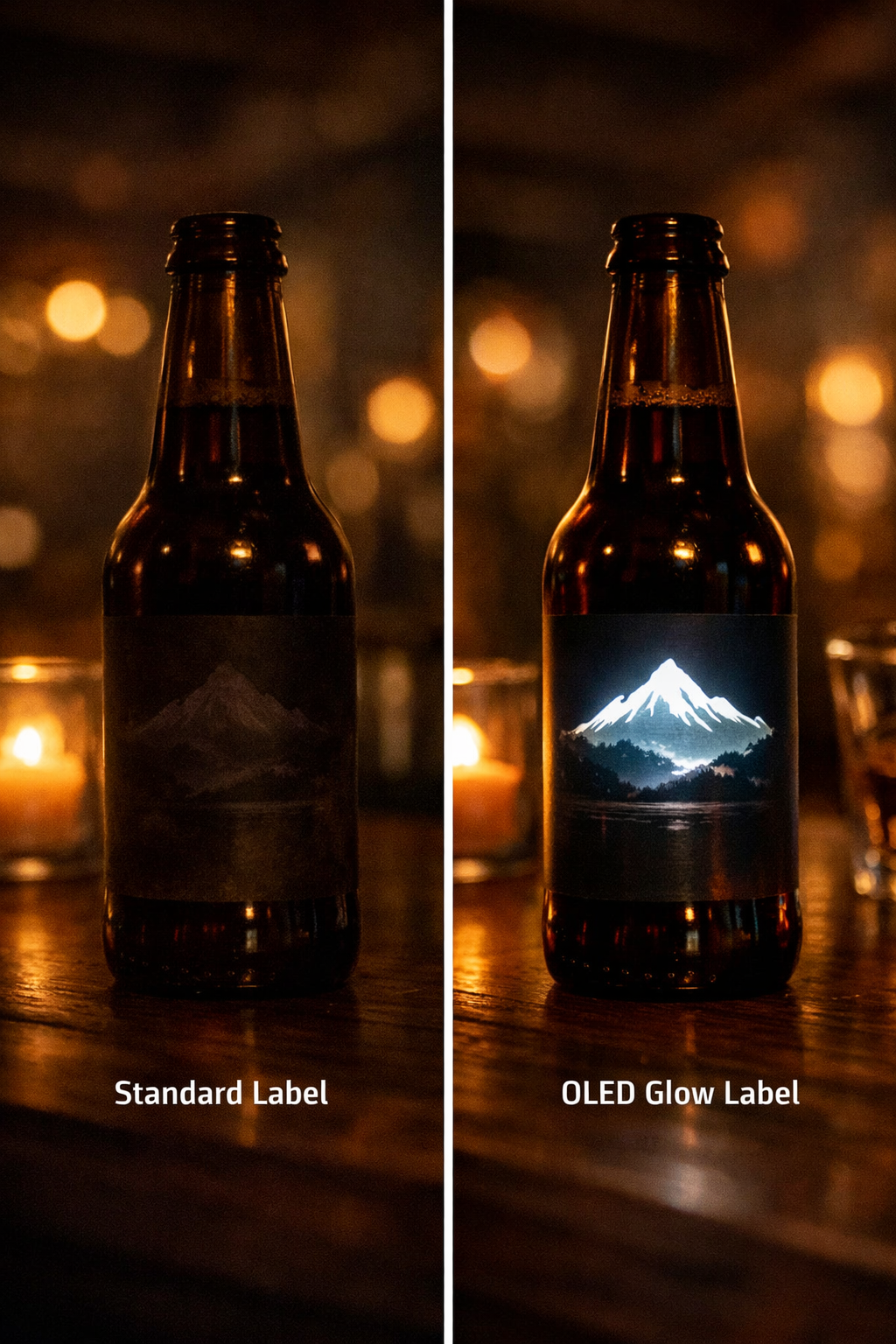
As these shifts converge, a clear direction emerges: packaging is moving toward speed, clarity and sensory interaction. Consumers want immediate understanding, not long decoding; they respond to micro-signals, not dense layouts. Trends such as dark-mode packaging, proof-first claims, tactile surfaces and simplified structures all point to the same underlying transformation - packaging is gradually behaving less like printed artwork and more like a small, intuitive interface.
This creates a new design logic for brands. Instead of asking “How should this look?”, the better question becomes: “What should this communicate in the first second?” That shift opens the door to elements that can guide, highlight or confirm value instantly especially in low-light or visually crowded environments where traditional packaging loses impact.
In this context, technologies that provide direct, sensory cues become increasingly relevant. Light, motion and touch-based responses allow packaging to communicate in a way that matches how modern consumers perceive the world: fast, emotional and highly visual. This is why ultra-thin printed OLED light aligns so naturally with these emerging patterns, it enables clarity and interaction without changing how people shop or introducing digital friction.
As packaging evolves into a more expressive, functional interface, several application areas stand out as particularly powerful for light-based interaction, especially in contexts where visibility, emotion and immediacy shape the purchase decision.
Printed OLED technology aligns naturally with the rise of Active Packaging Interfaces because it introduces a form of illumination that is ultra-thin, flexible, low-power and fully integrable into standard packaging materials. Unlike LEDs or backlit modules, printed OLEDs create light directly on the surface without bulky components, rigid substrates or the need for external screens. This makes them uniquely suited for packaging, where thickness, weight and form factor are tightly constrained.
What makes OLED especially relevant is its ability to deliver controlled, subtle and precise illumination. In low-light environments, nightlife venues, bars, festivals, airport lounges, a gentle pulse or highlight communicates far more effectively than colour or typography. The human brain processes light almost instantaneously, which gives printed OLED a functional role: guiding attention, signalling freshness or premium cues, and reinforcing brand moments with no cognitive load.
Printed OLEDs also support the shift toward micro-interactions. They can activate through touch or motion, creating small moments of confirmation or emotional resonance without requiring apps, QR codes or digital onboarding. This matches how Gen Z and Gen Alpha naturally interact with products: through quick, sensory cues rather than long text explanations.
From a manufacturing perspective, printed OLEDs bring scalability and consistency, enabling brands to deploy light-based interaction at volumes that were previously impossible with conventional light sources. Their thinness and flexibility also allow them to integrate seamlessly into labels, cartons and sleeves without altering the overall sustainability profile of the packaging.
In short, printed OLED light provides the physical capability required for packaging to behave like an interface, immediate, intuitive and built for the environments where modern purchasing decisions actually happen.
The table below summarises the key packaging trends shaping 2026 and beyond, outlining what each trend means, why it’s growing, and how it shows up in real applications.
Together, these trends show a clear shift toward faster, more intuitive and more sensory-driven packaging experiences, a direction that aligns naturally with the rise of Active Packaging Interfaces.
As packaging evolves, the direction becomes unmistakable: brands are moving toward faster, clearer and more sensory-driven experiences that help people make confident choices in the first moment of interaction. The shift from static graphics to functional interfaces is being shaped by behavioural change, low-light environments, and rising expectations around emotional clarity. Light, motion and touch-based cues offer a natural response to these dynamics, allowing packaging to communicate with immediacy rather than complexity.
Printed OLED technology fits into this transition not as a trend on its own, but as an enabling layer that makes these new behaviours possible at scale.
1. What are Active Packaging Interfaces?
Packaging that uses light, motion or touch to guide attention and create instant sensory cues, acting more like an interface than static graphics.
2. Are light-based cues becoming a trend in packaging?
Yes, especially in low-light environments where traditional designs lose visibility and consumers rely on fast, sensory signals.
3. How does printed OLED technology fit into packaging?
It provides ultra-thin, flexible illumination that integrates directly into labels or cartons, enabling light-based interaction without bulky electronics.
4. Why is low-light visibility important?
More product discovery happens in nightlife, events and ambient-lit stores, where illumination offers clarity that static visuals cannot.
5. How do Active Packaging Interfaces differ from connected packaging?
Connected packaging uses digital extensions; Active Interfaces communicate directly through sensory cues without requiring phones or apps.
6. Is light-integrated packaging scalable?
Yes. Thin, printable light sources like OLEDs support mass production because they work within standard packaging constraints.
7. Why do emotional micro-moments matter?
Gen Z and Gen Alpha decide quickly and intuitively, responding strongly to instant cues like subtle light or tactile triggers.
Last updated: January 2026
SOURCES:
(1)https://www.sciencedirect.com/science/article/abs/pii/S0969698913000040
(2)https://www.ipsos.com/en-us/gen-z-key-takeaways-data-and-strategic-insights
(3)https://www.nielsen.com/insights/2015/make-the-most-of-your-brands-20-second-windown/
(4)https://www.nature.com/articles/s41598-018-31894-5
(5)https://www.sciencedirect.com/science/article/pii/S0079642520301249
(6)https://www.nature.com/articles/srep14673
(7)https://www.nature.com/articles/s41598-019-39813-y
(8)https://chaireomerdesserres.hec.ca/wp-content/uploads/2020/05/Linking-Retail-Strategy.pdf
(9)https://scindeks-clanci.ceon.rs/data/pdf/1821-3448/2022/1821-34482204041T.pdf
(10)https://www.zora.uzh.ch/server/api/core/bitstreams/01f918a2-69d8-4ceb-8150-4c0643cf47b5/content
.svg)


