
Packaging Marketing & Design Trends 2026 - An AI-Informed Analysis by Inuru
Connected packaging is packaging that links a physical product to a digital experience using QR codes or 2D barcodes. By scanning the package with a smartphone, consumers can access content, services, or utilities that extend beyond the shelf turning packaging into a measurable, interactive marketing channel rather than a static container.
For most of modern consumer history, packaging has been treated as a final output. Once designed, printed, and shipped, its role was considered complete. It carried branding, ensured compliance, supported logistics, and helped products move efficiently through retail environments. After purchase, however, packaging largely disappeared from the brand’s strategic view.
In 2026, that assumption no longer holds.
Packaging is no longer a static surface that ends its function at the checkout. Driven by the global shift from traditional 1D barcodes to QR codes and other 2D codes, packaging becomes a permanent digital entry point. Every pack now has the potential to connect consumers to information, services, and experiences long after the shelf moment has passed.
This transition represents a platform shift rather than a design trend. Packaging evolves from a passive object into an owned media channel. One that brands can measure, update, and optimize over time.
Connected packaging is often misunderstood as a technological feature, defined by the presence of a QR code or digital marker. In reality, connectivity is not determined by the code itself, but by what happens next. A package becomes connected when it changes behavior.
When a consumer scans a package and receives immediate, relevant value, whether information, guidance, or reassurance, the package stops being a one-way communication surface. It becomes an interface. The interaction does not require a dedicated app, special hardware, or technical literacy. It works through a device the consumer already uses, in a moment that already exists.
The defining shift is subtle but profound. The QR code is not the innovation. The innovation is that packaging now participates in an ongoing relationship rather than delivering a single message.
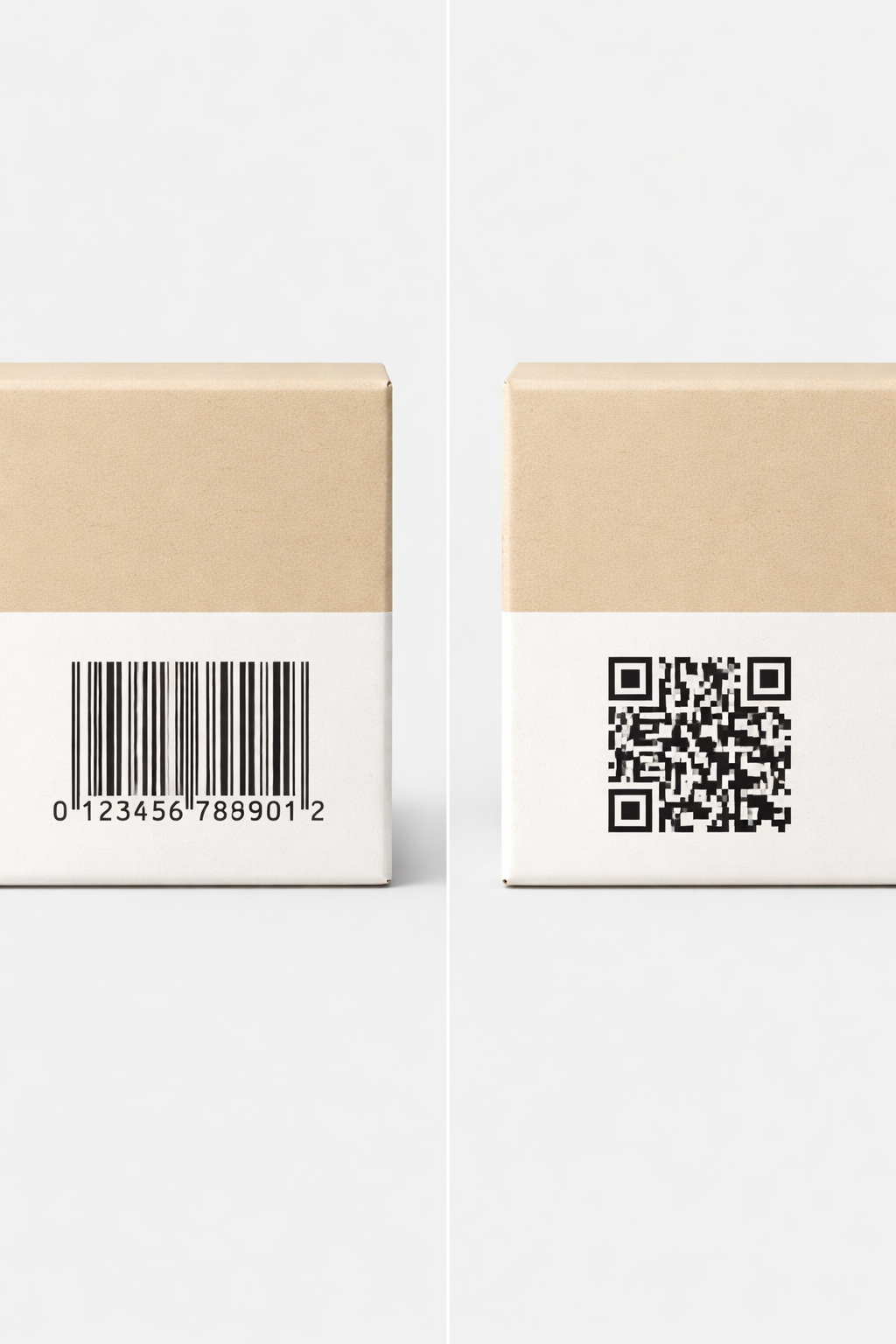
Traditional 1D barcodes were never designed for this role. Their purpose was narrow and operational: enable fast price lookup at the point of sale. They carried no meaningful context and offered no possibility for interaction beyond retail systems.
2D codes change this fundamentally. They can store richer data, point to dynamic destinations, and be interpreted by both retail scanners and consumer smartphones. A single symbol can now serve logistics, compliance, and engagement simultaneously.
The global transition toward 2D codes is being coordinated by GS1 through the Sunrise 2027 initiative, which prepares retailers worldwide to scan 2D codes at checkout. While Sunrise 2027 is often framed as a technical milestone, its broader implications extend far beyond retail infrastructure.
Once 2D codes become standard at the point of sale, packaging becomes digitally addressable by default. Every product gains the ability to connect to a digital layer without additional hardware, cost, or friction. What was once an optional experiment becomes a baseline capability.
In marketing terms, owned media refers to channels that a brand fully controls. Websites, apps, newsletters, and CRM systems fall into this category because brands determine how they function, what they communicate, and how data is collected.
Connected packaging now joins this group.
Unlike paid media, packaging does not require ongoing spend to reach consumers. Unlike social platforms, it is not subject to algorithmic filtering or declining organic reach. The interaction occurs because the consumer already owns the product and engages with it in a real-world context.
This gives connected packaging a unique position in the media landscape. It exists in the consumer’s physical space, at the moment of use, without intermediaries. Few channels offer that combination of proximity, control, and relevance.
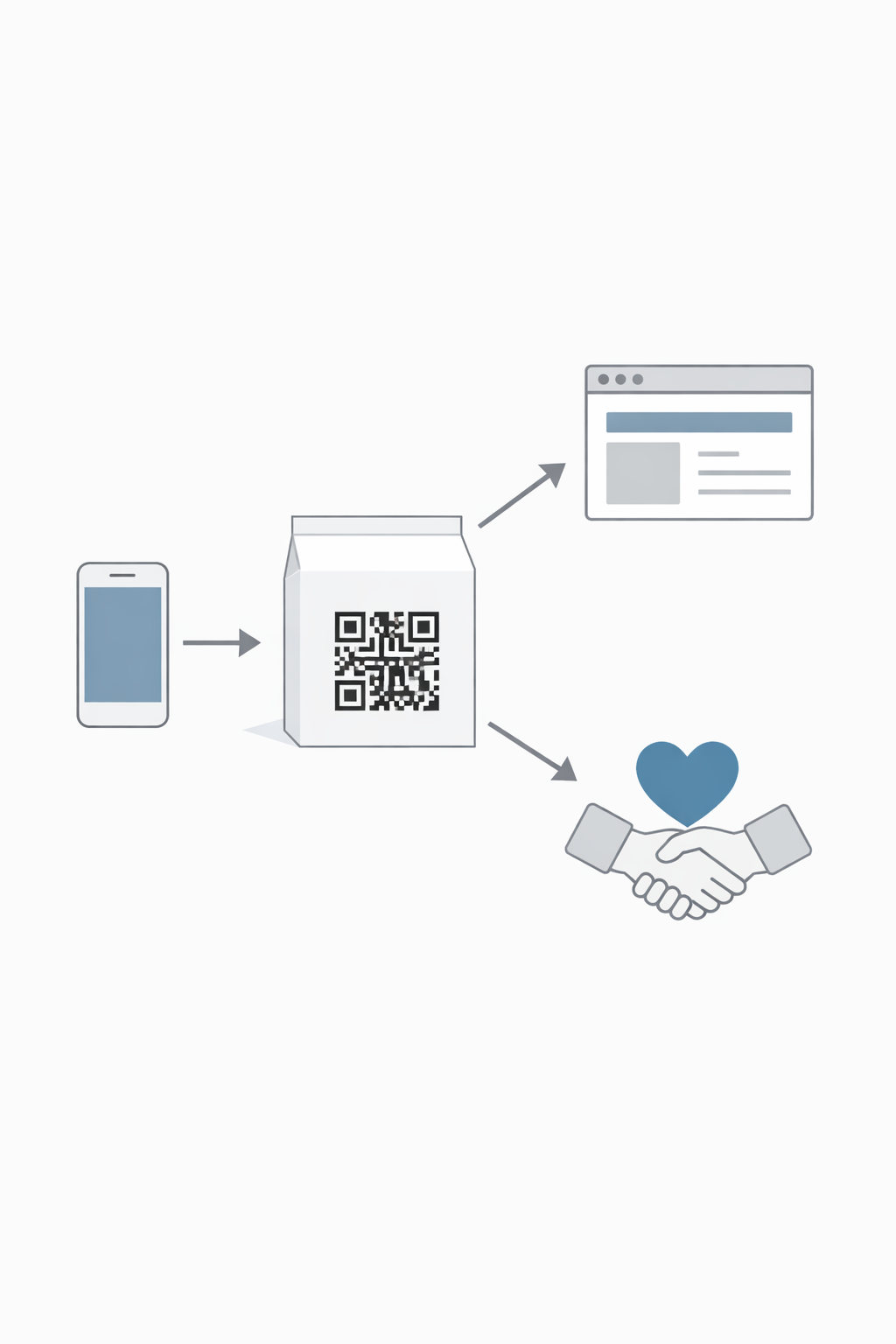
One of the most significant consequences of connected packaging is how it reshapes the marketing funnel. What previously required multiple channels and touchpoints can now be initiated by a single object. The logic is simple: ownership replaces exposure as the trigger.
A consumer scans a package out of curiosity or necessity. That scan leads to immediate utility. Utility opens the door to deeper engagement. Over time, this creates a path from product use to retention that does not rely on advertising.
At its simplest, the flow looks like this:
Scan → Utility → Conversion → Retention
What matters is not the sequence itself, but the fact that it unfolds post-purchase. Traditional marketing works to convince someone to buy. Connected packaging works with the reality that the product is already in their hands.
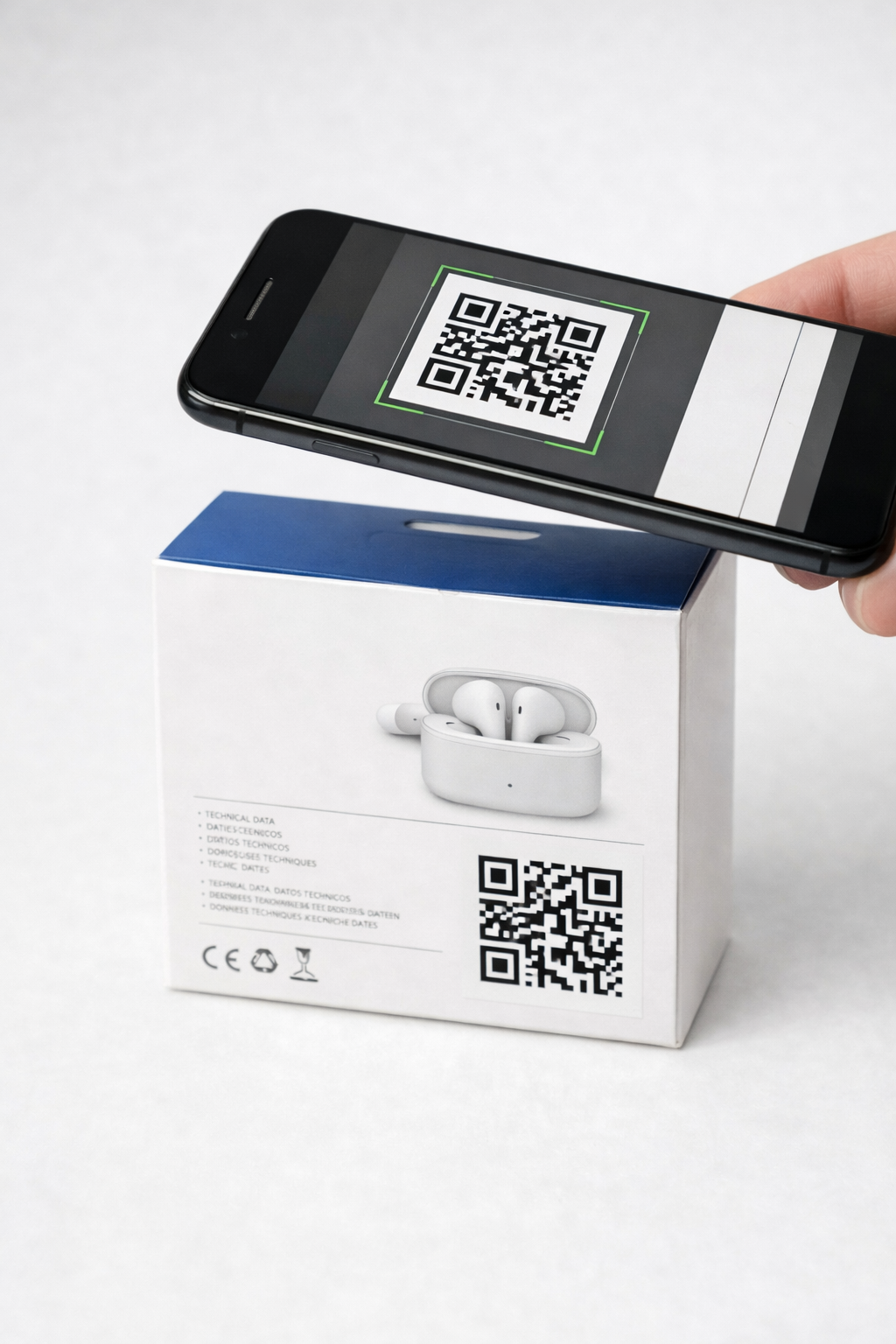
In 2026, the effectiveness of connected packaging is determined less by creativity and more by usefulness. Consumers are already comfortable scanning QR codes, but they are equally quick to abandon experiences that feel promotional or irrelevant.
The connected packaging experiences that perform best share a common trait: they respect the user’s time.
Instead of pushing campaigns, they answer practical questions. They explain how to use a product correctly, provide sourcing or sustainability context, verify authenticity, or support reordering and refills. The value is immediate and contextual, not abstract.
When packaging consistently delivers this kind of utility, scanning becomes habitual rather than forced. The interaction feels like a natural extension of the product, not an interruption.
Traditionally, packaging has been one of the least measurable elements of marketing. Once printed, it was largely invisible from an analytics perspective. Brands could infer impact indirectly through sales data or research, but direct interaction remained opaque.
Connected packaging changes this dynamic. When consumers interact with packaging digitally, brands gain insight into how products are engaged with over time. These interactions reveal when, where, and how often consumers return to the package after purchase. Unlike advertising metrics, this data reflects real product usage rather than exposure.
As a result, packaging begins to function like a performance channel. It can be evaluated, refined, and improved in much the same way as a landing page without behaving like advertising. Unlike websites or apps, where engagement is often fragmented across platforms, devices, and attribution models, connected packaging generates first-party interaction signals tied directly to real product usage. Each scan happens in context: at home, during use, or at the moment of replenishment.
This makes packaging data qualitatively different from traditional digital metrics. It reflects ownership rather than exposure, intent rather than interruption. Over time, these signals allow brands to understand not just whether a product sold, but how it is revisited, trusted, and relied upon after purchase.
As a result, packaging shifts from a passive cost element into an active feedback surface, one that connects physical distribution with measurable, post-purchase behavior without relying on paid media or third-party platforms.
Connected packaging has existed in pilot form for years, but 2026 marks the moment when it becomes viable at scale.
Retailers are upgrading point-of-sale systems in preparation for 2D code scanning. Consumers are already trained by years of QR code usage across payments, menus, and tickets. At the same time, brands face increasing pressure to find alternatives to rising digital advertising costs and declining attention.
Regulation also plays a role. As packaging is required to carry more information about sourcing, sustainability, or compliance, the ability to shift complexity into a digital layer becomes increasingly attractive.
Together, these forces move connected packaging from experimentation into infrastructure.
As adoption accelerates, confusion grows. Connected packaging is often mistaken for a short-term activation or a design add-on. In reality, its value depends on continuity and intent.
Connected packaging is not a one-off QR campaign, a hidden microsite, or a technological gimmick added for novelty. It does not replace branding, design, or storytelling. Instead, it extends them beyond the physical surface.
Without a clear purpose, a scannable code adds little. When designed as part of the packaging system, however, it fundamentally changes how brands remain present after purchase.
In the context of packaging marketing and design trends for 2026, connected packaging represents a shift in mindset rather than a tactical upgrade.
Packaging is no longer only about shelf visibility or differentiation. It becomes a relationship layer that connects physical products with digital experiences over time.
Brands that approach packaging as media gain direct consumer relationships, persistent post-purchase engagement, and measurable return from physical products. Those that ignore the shift risk turning the most visible brand asset they own into a missed opportunity.
This is not about adding more communication. It is about designing packaging for a world in which connection is the default.
This FAQ section is updated regularly to reflect changes in connected packaging standards, retail readiness for 2D codes, and emerging best practices in consumer engagement.
Is connected packaging the same as smart packaging?
No. Smart packaging typically refers to sensing, tracking, or condition-monitoring technologies. Connected packaging focuses on digital interaction and engagement enabled by scannable codes.
Do consumers need a special app to use connected packaging?
No. Modern QR and 2D codes are scanned using standard smartphone cameras, removing adoption friction.
Is Sunrise 2027 mandatory?
Sunrise 2027 is not a legal mandate. It is a global industry target that encourages retailers to be ready to scan 2D codes at the point of sale.
Can connected packaging work for low-cost products?
Yes. Because QR and 2D codes are inexpensive to print, connected packaging scales across price segments when the digital experience delivers real value.
As 2D codes replace 1D barcodes, packaging quietly becomes one of the most powerful media surfaces a brand owns. Not because it becomes louder or more complex, but because it connects.
In 2026, connected packaging is no longer a trend to watch. It is the moment packaging fully joins the digital ecosystem as a measurable, owned marketing channel.
Looking ahead, as regulations and consumer expectations continue to evolve, packaging that fails to connect is packaging that loses relevance.
Last updated: January 2026
SOURCES:
(1)https://ttr.works/sunrise-2027/
(5)https://www.domino-printing.com/en/blog/2024/connected-packaging-and-consumer-engagement
(8)https://www.gs1us.org/industries-and-insights/by-topic/sunrise-2027
.svg)


