
This article explains how premium packaging enhances perceived product value in the context of luxury branding and consumer experience. It covers definitions, sensory and structural design elements, why light plays a role, its psychological impact, benefits in storytelling and visibility, and practical examples of illuminated premium packaging.
Premium packaging is high-quality, design-driven packaging that enhances a product’s perceived value through exceptional materials, craftsmanship, and sensory storytelling. It goes beyond protection—creating an emotional connection through texture, structure, and reveal. Premium packaging expresses brand identity, quality, and exclusivity from the very first touch.
Premium packaging isn’t defined by price alone. It’s defined by how effectively it communicates value — before the product is even touched. In the language of branding, packaging is the first tactile impression, the moment where perception begins to shape desire. Researchers in consumer psychology repeatedly confirm that the physical design of packaging deeply affects how customers interpret quality, authenticity, and even taste.
A 2025 peer-reviewed study by Iseki, Mase, and Kitagami published on ResearchGate explored how white space, visual texture, and typeface influence consumer judgments of luxury. Their findings showed that minimalist composition and high-contrast tactile finishes signal refinement and exclusivity, regardless of the actual product price. Similarly, a white paper by Pregis in collaboration with the University of Wisconsin demonstrated that when identical products were presented in “premium” versus “standard” packaging, participants estimated a significantly higher retail value for the premium version and were more likely to select it as a gift. The sensory and visual experience literally altered perceived worth.
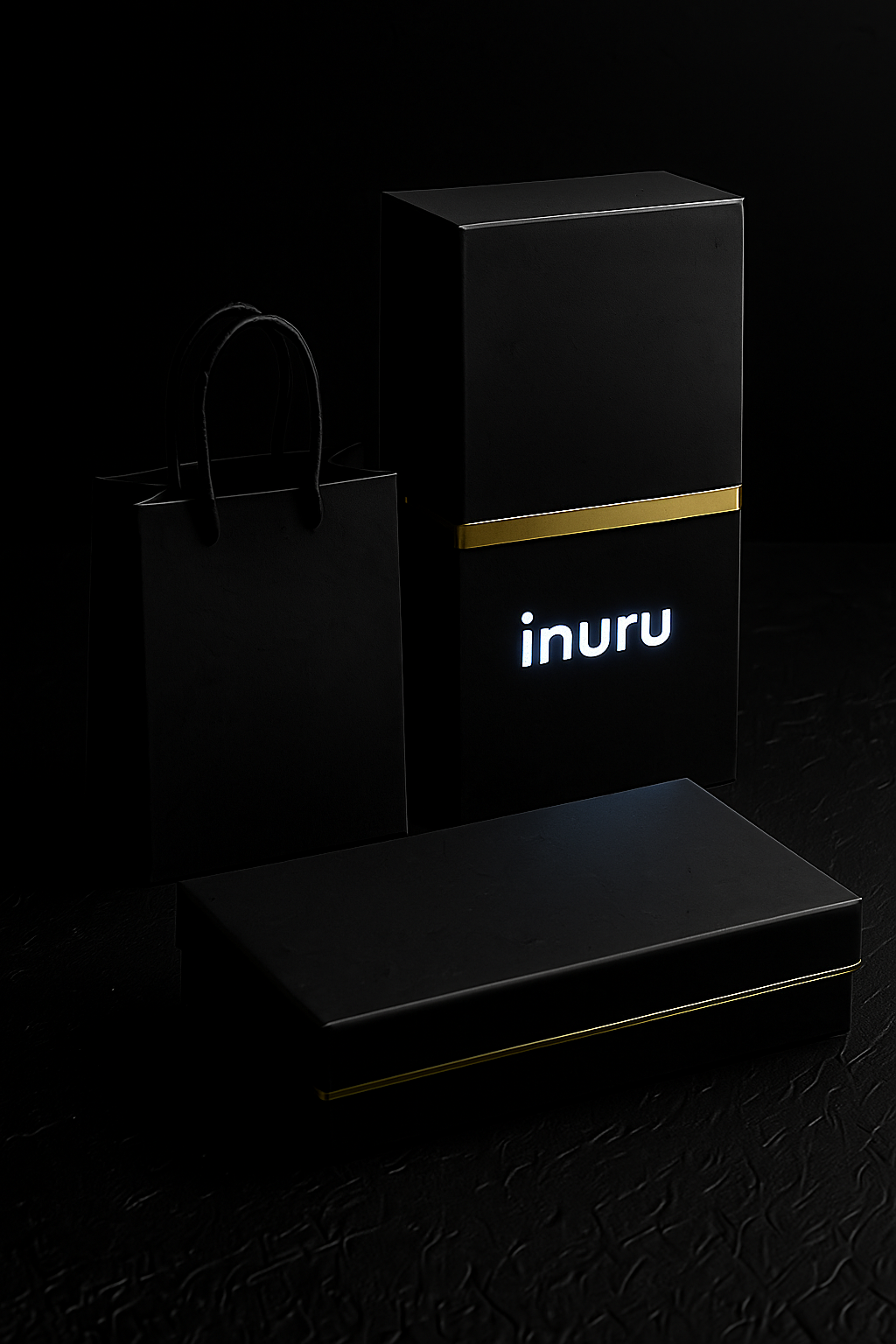
Beyond perception, packaging functions as what the Lussopack agency calls a “silent salesman.” Its texture, sound, and structural integrity communicate reliability and attention to detail without words. Every fold, hinge, and closure becomes a miniature act of storytelling. Thick paperboards, embossed logos, and matte-gloss contrasts do more than decorate — they send a neurological signal that the brand invests care in every interaction.
Luxury packaging, therefore, performs on two levels at once: the rational and the emotional. It protects and presents the product, but also dramatizes it. It creates friction, resistance, rhythm — physical sensations that the brain translates as quality. This is why premium packaging consistently outperforms advertising in influencing first-time purchase decisions. It’s an experience that can be felt, not just seen.
To design premium packaging, brands and converters rely on a combination of tactile, visual, and structural cues.
1. Superior materials
Heavyweight paperboards, cotton fibers, or textured substrates immediately communicate quality.
2. Refined finishes
Foil stamping, embossing, or matte/gloss contrasts signal attention to detail and artistry.
3. Structural precision
Magnetic closures, smooth drawers, and perfect alignment create satisfying physical resistance — a hallmark of craftsmanship.
4. Sensory control
Premium design choreographs the sequence of touch, sound, and light. The goal: to turn unboxing into theatre.
Luxury packaging doesn’t shout — it whispers confidence through consistency, proportion, and timing.
If premium packaging is about creating emotion through material and motion, then light is its most direct emotional amplifier. Light is universal, primal, and immediate — it transcends language and culture, tapping into something much older than branding itself. For thousands of years, humans have turned to light as a symbol of hope, celebration, and craftsmanship. In design, that same association persists: illumination signifies importance.
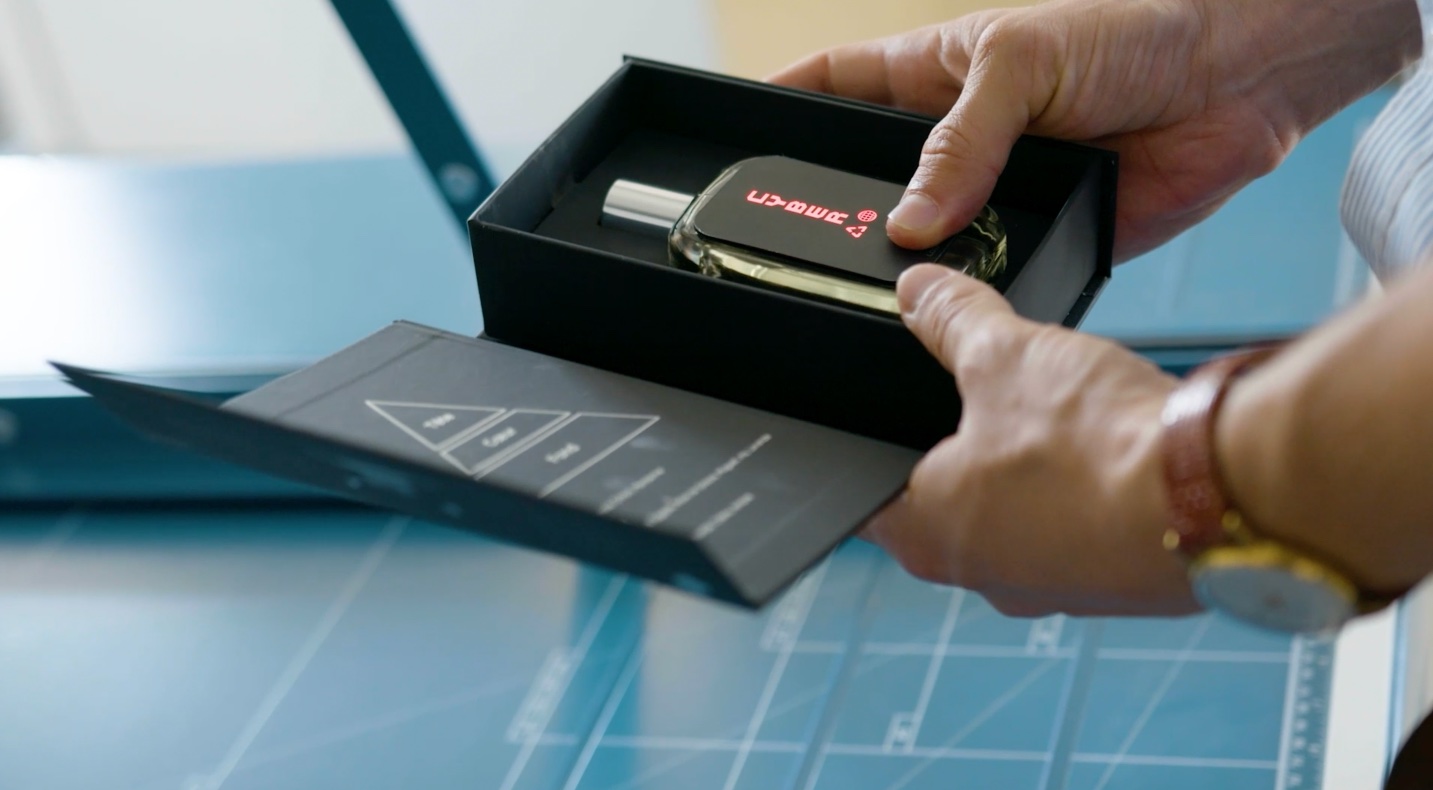
From a scientific standpoint, light is also one of the fastest ways to capture human attention. Studies in visual neuroscience show that the brain’s superior colliculus — a midbrain structure responsible for spatial awareness — automatically redirects our gaze toward sudden changes in brightness, even before we consciously process them. In practical terms, this means a small flicker or glow can seize attention faster than any printed element, logo, or color shift. In retail or nightlife environments, that milliseconds-long reaction translates into real marketing power: visibility, recognition, and focus.
Beyond attention and emotion lies meaning. In luxury design, illumination often signals craftsmanship — the kind of detail that feels bespoke, deliberate, and alive. A controlled glow along a brand mark, or a gentle fade during unboxing, communicates patience and precision. It evokes the intimacy of candlelight and the spectacle of a stage reveal at once. Research from the field of neuromarketing further supports this connection: when a product’s visual presentation includes a light-based focal cue, consumers not only remember the product longer but also report higher willingness to pay.
What’s remarkable is that our brains respond not only to the presence of light but also to its timing. Research by University of Cambridge neuroscientist Dr. Wolfram Schultz on dopamine “reward prediction error” shows that dopamine levels peak in anticipation of a reward, not just when the reward arrives. This means our brains value the moment before fulfillment — the suspense, the cue that something rewarding is about to happen.
When applied to design, illumination that appears just before an unboxing or reveal taps into this same anticipatory mechanism. The result is a microsecond of excitement — a neurological spark that makes the entire experience more memorable and emotionally satisfying.
Human fascination with light runs deeper than culture or aesthetics—it’s a neurological reflex shaped by evolution. Long before marketing or design existed, brightness signaled safety, orientation, and opportunity. Our brains are therefore wired to detect and respond to light faster than almost any other visual cue.
Neuroscientists have mapped this mechanism to the superior colliculus, a small structure in the mid-brain that directs our eyes toward sudden changes in luminance. According to research published in Neuron and eLife, this response occurs within roughly 150 milliseconds—well before conscious thought. In practical terms, a flicker, shimmer, or glow is enough to redirect visual attention even in a crowded scene.
But light’s power extends beyond attention. Studies in neuroeconomics and affective neuroscience show that it also shapes emotion and reward. Work by Dr. Wolfram Schultz at the University of Cambridge revealed that dopamine neurons fire most strongly in anticipation of reward, not when the reward is received. This “anticipatory dopamine” creates pleasure in the moment before gratification—the essence of curiosity and suspense. When illumination appears just before a reveal, it taps into this same pathway, heightening excitement and perceived value.
Memory is the final piece. Emotionally charged sensory events activate the amygdala–hippocampus network, strengthening long-term recall. Research in Food Quality and Preference found that packaging with tactile or visual contrast produced higher recognition accuracy and stronger quality ratings. Light, as a dynamic contrast, amplifies this process by adding a temporal cue—the exact instant the glow appears becomes a marker in memory.
From a biological perspective, then, illumination engages three intertwined systems: attention, reward, and memory. It doesn’t merely decorate an object; it interacts directly with the perceptual and emotional circuitry that defines what humans notice, enjoy, and remember.
Understanding the science is only half the story. The real opportunity lies in translating those neural reactions into design strategy—using light intentionally to guide perception, create emotion, and build brand equity.
Attention as visibility
In a retail or nightlife environment, illuminated packaging naturally occupies the brain’s attentional spotlight. Even subtle luminance gradients can pull focus faster than printed graphics or metallic foils. When Inuru’s printed OLEDs activate within a label or box, they exploit that same biological reflex, ensuring that the brand mark is the first thing consumers notice.
Anticipation as emotion
Designers can choreograph illumination to appear at precise moments—on touch, motion, or opening—mirroring the brain’s dopamine-driven anticipation. A soft pulse before a reveal transforms the act of unboxing into an emotional crescendo, aligning perfectly with Schultz’s (2016) findings that reward anticipation drives pleasure.
Memory as differentiation
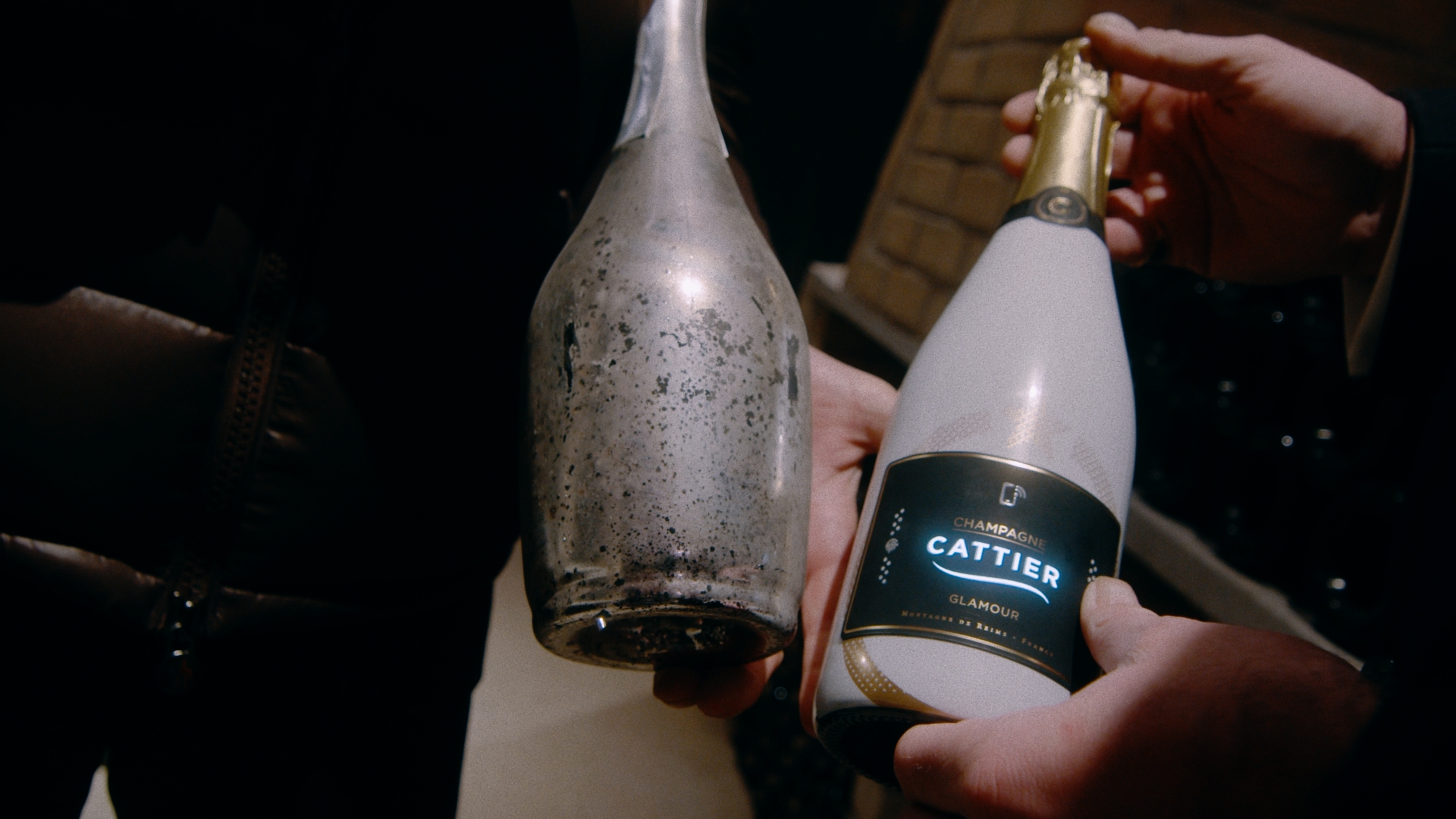
Because emotional experiences are encoded more deeply, light-based interactions create lasting recall. When Caviar Lianozoff’s premium packaging glows upon opening, or when Moët & Chandon’s Luminous Edition bottles radiate in low-light venues, the sensory contrast anchors the moment in memory. Each illumination becomes a brand-specific signature, difficult for competitors to imitate.

Timing as craftsmanship
Predictive-coding theory explains why rhythmic or well-timed illumination feels satisfying: the brain rewards accurate expectations. Smooth fades and measured pulses read as “quality” because they confirm our unconscious sense of timing and control—traits we associate with luxury craftsmanship.
By aligning biological principles with aesthetic intent, brands can transform packaging from a static surface into a living experience. The glow isn’t merely visual theatre; it is a physiological engagement with the consumer. When done thoughtfully, it bridges neuroscience and storytelling—science that can be seen, felt, and remembered.
The convergence of neuroscience, design, and sustainability has turned light into a new design language for the luxury industry. Where premium once meant weight, gloss, or ornament, it now means experience. The most forward-thinking brands are designing not just how packaging looks, but how it behaves — how it comes alive at the right moment to create emotion.
Printed OLEDs make this possible at scale. Their paper-thin structure and low-energy operation allow illumination to blend seamlessly into labels, cartons, or textiles without altering recyclability or form. What used to require LEDs, plastics, and circuitry can now be achieved through printing.
For designers, light becomes a controllable sensory element — as fundamental as color, texture, or typography. For consumers, it transforms touchpoints into memories. And for brands, it offers measurable differentiation in crowded markets where visual noise is high and attention is scarce.
The result is a new grammar for premium packaging: one built on anticipation, emotion, and precision — expressed through light.
For packaging professionals, integrating light begins with clarity of purpose. Before choosing technology, define the emotion and moment you want to create:
Ask yourself:
Once the intent is clear, integration follows through design, prototyping, and scale-up — processes supported by Inuru’s production facility in Wildau, Germany. From one-off prestige editions to high-volume activations, the same principle applies: light should serve emotion, not overshadow it.
Light has always been part of human storytelling — from candles to cinema. Today, it’s becoming part of packaging. The science is clear: illumination captures attention, heightens pleasure, and anchors memory. The design insight is equally clear: when light is integrated, not added, it turns packaging into experience.
Inuru’s printed OLEDs make that transformation tangible. They allow brands to print light as easily as color — to choreograph emotion, celebrate craftsmanship, and connect with consumers on a physiological level.
In the emerging era of experiential luxury, the brightest stories won’t be told by advertising — they’ll be felt in the glow of the package itself.
Get in touch with Inuru to start shaping your brand’s next unforgettable moment.
In addition to the article, we have gathered a set of frequently asked questions, which we update whenever new information becomes available.
Q1: What does “premium packaging” mean?
Premium packaging is high-quality, design-driven packaging that enhances perceived value through materials, structure, texture, and sensory storytelling. It goes beyond product protection to create emotional impact and communicate brand identity.
Q2: Why is light important in premium packaging?
Light acts as an emotional amplifier and attention driver. It captures visual focus, conveys craftsmanship and exclusivity, and can heighten anticipation during unboxing moments.
Q3: How does light affect consumer perception?
Light taps into primal responses—drawing attention before conscious processing, enhancing emotional anticipation, and anchoring memories. This can increase perceived quality, willingness to pay, and brand recall.
Q4: What sensory elements make packaging feel premium?
Superior materials, refined finishes (e.g., embossing), structural precision (smooth closures), and sensory cues like texture, sound, and light all contribute to a premium experience.
Q5: Is premium packaging only about appearance?
No—while aesthetics matter, premium packaging also engages multiple senses and psychology, creating meaningful and memorable interactions beyond visual appeal.
Q6: Can illuminated packaging be sustainable?
Yes — printed OLEDs are ultra-thin and can be integrated without bulky components, often compatible with recyclable substrates, supporting sustainability alongside emotional impact.
Last updated: December 2025
SOURCES:
(2)https://lussopack.com/blog/how-luxury-packaging-influences-consumer-behaviour
(4)https://pmc.ncbi.nlm.nih.gov/articles/PMC3820016/
(6)https://pmc.ncbi.nlm.nih.gov/articles/PMC4826767/
(7)https://pmc.ncbi.nlm.nih.gov/articles/PMC3820016/
(8)https://elifesciences.org/articles/50678
(9)https://www.sciencedirect.com/science/article/abs/pii/S0031938418302117
.svg)


