
Choosing the right lighting technology for illuminated labels depends on light quality, integration into production, functionality, safety, and supply chain reliability. OLED, LED, and EL technologies each create light differently, which affects how a label looks, how easily it scales, and how it supports brand perception. The best solution is the one that matches the role light should play in your brand, not simply the brightest option available.
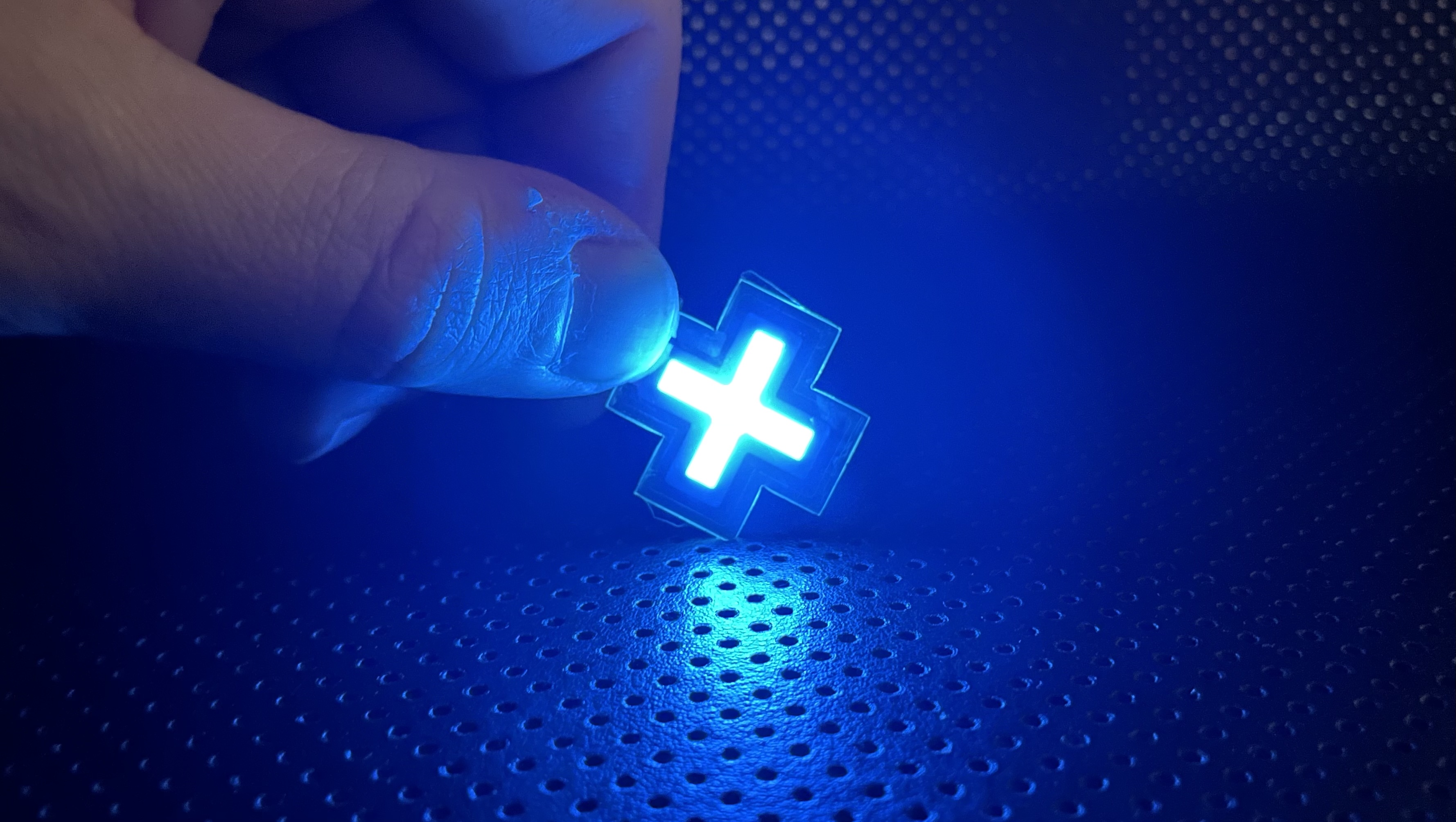
When brands consider illuminated labels, the most important factor is not the technology itself but the quality of light it produces. Light quality defines how a product feels at first glance and whether illumination supports a premium perception or undermines it.
OLED produces bright and homogeneous surface light. Because the entire area emits evenly, the illumination feels calm, intentional, and refined. This is especially important for premium brands where light should enhance the design rather than draw attention to itself. If the goal is to create a high end impression, OLED is currently the only technology that consistently delivers this level of visual quality.
EL also produces homogeneous light, but it is significantly dimmer. In darker environments the glow can feel atmospheric, but in most real world settings it lacks presence. The light remains technically uniform, yet its impact is limited, which restricts its use to niche or low light scenarios.
LED labels can achieve high brightness, but brightness alone does not guarantee quality. LEDs are point light sources, which means the light often appears as visible dots or hotspots. Even with diffusion, homogeneity is usually limited. As a result, the label can look fragmented or overly technical, especially when viewed up close.
Integration into production plays an equally important role. OLED solutions can be integrated similarly to standard labels, without removing bottles from the production line. This enables scalability and consistency. EL solutions typically require batteries placed under the bottle or additional manual steps, which makes mass production difficult and often impractical. LED labels are relatively easy to apply at lower brightness levels, but as brands demand more brightness or better homogeneity, the label becomes thicker and harder to apply. Large scale automated application of high quality LED labels has not yet been fully proven.
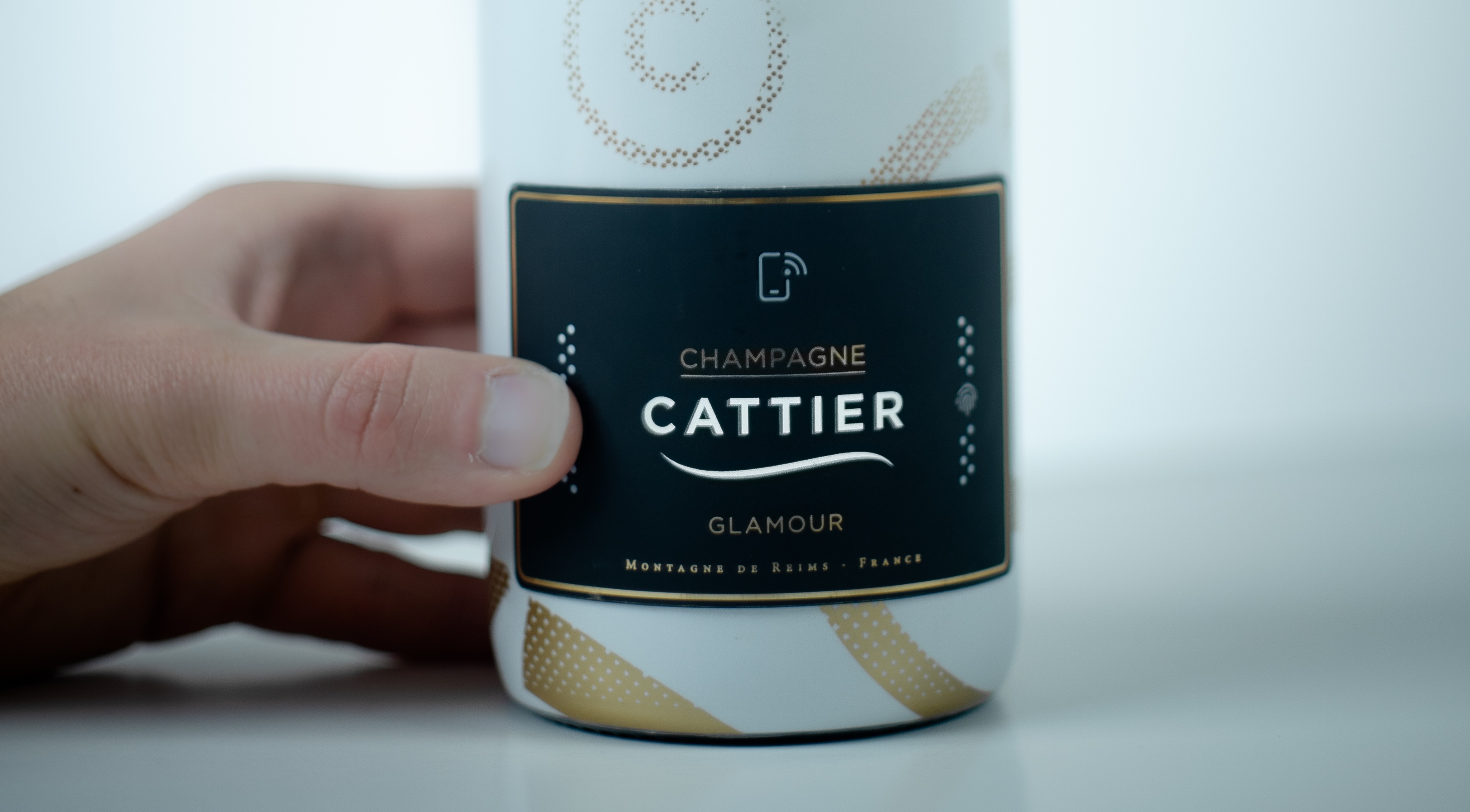
Beyond static illumination, many brands want light to actively communicate. Animation can guide attention, highlight elements of a design, or add a layer of storytelling to the label.
OLED technology allows precise control over illumination. Specific areas of the label can be animated independently, creating subtle transitions or sequences without affecting overall light quality. Because the light remains homogeneous, animation feels smooth and intentional rather than distracting.
LED animation requires an increased number of LEDs to achieve more complex effects. This leads to higher energy consumption, higher costs, and further compromises in visual quality. As more LEDs are added, non uniformity becomes more noticeable, and the label can lose visual coherence. In many cases, animation becomes louder rather than more refined.
When animation is part of the brand experience, the ability to maintain light quality while introducing movement becomes critical.
Safety is an essential requirement for any illuminated label, especially those powered by batteries and intended for consumer use. OLED and LED technologies operate at low currents and low voltages, which places them on a similar safety level and makes them well suited for packaging applications.
EL technology operates differently. Although the current is low, EL requires high voltage. This increases the importance of proper insulation and correct separation of electronic components, particularly around the battery. Without careful design, this can introduce safety risks and additional certification challenges.
From a brand perspective, safety is closely linked to trust. A solution that requires more complex safeguards not only increases development effort but also introduces potential points of failure. This is another reason why light quality cannot be considered in isolation. Technologies that compromise on light quality while increasing safety complexity rarely align with premium brand expectations.
In recent years, supply chain reliability has become a decisive factor in technology selection. Brands are no longer choosing solutions based only on performance, but also on where and how those solutions are produced.
OLEDs manufactured in Germany benefit from a stable industrial environment and predictable logistics. This enables faster deliveries and reduces dependency on volatile global supply chains. For international brands, this stability is crucial, especially when planning larger rollouts or long term programs.
A stable supply chain supports consistency in quality and timing, independent of political or economic disruptions. When illuminated labels move from experimental concepts to strategic branding elements, reliability becomes just as important as visual impact.
After looking at light quality, integration, functionality, safety, and supply chain considerations, the differences between OLED, LED, and EL become clearer when viewed through the role light is meant to play.
OLED suits brands that treat light as part of the material and the overall design language. It supports a controlled, refined glow that integrates seamlessly into the label and scales reliably in production. The emphasis is on consistency and visual quality rather than raw brightness.
LED works best when light is primarily used for visibility. It draws attention effectively but remains visibly technical in character. The light is seen first, and the label second, which can be the right choice for concepts where impact outweighs subtlety.
EL fits scenarios where light is intended to be atmospheric rather than dominant. Its glow is uniform but restrained, making it suitable for dark environments and limited applications where scale and daytime visibility are not critical.
Seen this way, the decision is less about choosing the most advanced technology and more about deciding how present or how restrained light should be in the brand experience.
This section is regularly updated to reflect new insights, technologies, and common questions we receive about illuminated labels.
Which lighting technology is best for premium illuminated labels?
For premium brands, light quality matters more than maximum brightness. Homogeneous surface light generally feels more refined than point based illumination with visible hotspots. The best solution is the one that supports brand perception without drawing attention to the technology.
Is brightness the most important factor when choosing illuminated labels?
Brightness alone does not define perceived quality. How evenly light is distributed and how it interacts with materials usually has a stronger impact. A softer but homogeneous glow often appears more premium than very intense light.
Can illuminated labels be integrated into mass production?
Some illuminated label technologies can be integrated into standard production lines and scaled reliably. Others require manual steps or external battery placement, which limits scalability. Integration should be evaluated early when planning larger volumes.
Are illuminated labels safe for consumer products?
Illuminated labels are generally safe when operating at low voltage and low current. Technologies requiring higher voltage need additional insulation and careful design. Safety considerations can influence development time and certification.
How does supply chain location affect illuminated labels?
Supply chain location affects lead times, consistency, and long term availability. Production in stable industrial regions usually offers more predictable delivery. This becomes especially important for international programs.
How do I choose the right lighting technology for my brand?
Start by defining the role light should play in your brand experience. Some brands need visibility, others atmosphere, and others integrated premium presence. Once this role is clear, the technology choice becomes much easier.
Choosing the right lighting technology for illuminated labels is not about selecting the most advanced option on paper. It is about understanding how light quality, integration into production, functionality, safety, and supply chain reliability come together to support a specific brand experience.
In packaging, light is never neutral. It influences how a product is perceived before a label is read or a story is understood. Whether light should attract attention, create atmosphere, or feel seamlessly integrated depends on the role it is meant to play in the overall design and positioning of the brand.
When light is treated as a design material rather than a technical add-on, the decision becomes clearer. The right solution is the one that allows light to support the brand consistently, responsibly, and at scale, without overpowering the product or fading into the background.
Considering illuminated labels and unsure which technology fits your brand? Get in touch to explore the right approach.
Last updated: December 2025
SOURCES:
(1)https://www.oled-info.com/oled-lighting
(3)https://oe-a.org/topics/printed-electronics
(4)https://www.energy.gov/eere/ssl/led-basics
(5)https://www.sciencedirect.com/topics/materials-science/electroluminescence
.svg)


