
This article explains the concept of shelf-visibility in the context of future retail and product discovery. It covers what shelf-visibility is, how environmental and design factors influence it, emerging technologies like AI and printed OLED, benefits for brands, evolving retail science, and implications for product placement by 2030.
Shelf-visibility is a retail performance metric that reflects how quickly a product becomes visually identifiable within its category block. It is influenced by shelf architecture, viewing angles, shopper navigation patterns, and the environmental conditions that govern how the eye locates a target within a crowded assortment.
Every retail environment—from convenience stores to travel retail—presents shoppers with a visual puzzle. People move through aisles quickly, often with low engagement, scanning rather than inspecting. According to in-store behavior studies published in the Journal of Retailing, shoppers typically make orientation decisions in under two seconds as they approach a category block.
This shift has elevated shelf-visibility from a design detail to a strategic discipline. Brands that understand how placement, competition, category structure, and environmental variability influence product discovery gain an advantage long before the shopper compares features, price, or brand story.
In the coming decade, shelf-visibility will be shaped by technologies and models that did not exist in packaging fifteen years ago: simulation-based planograms, AI-driven visibility scoring, retail attention analytics, and illumination systems designed to compensate for increasingly unpredictable store conditions. This article explores how shelf-visibility works, why it will evolve, and why emerging display technologies like printed OLED may become part of the retail toolkit—not as decoration, but as a structural solution to a structural visibility problem.
Shelf-visibility determines the probability that a shopper will register a product within the first one to two seconds of encountering a category block. Eye-tracking studies from Tobii Pro show that most shoppers do not consciously compare items; they rely on quick fixation to guide navigation. The product the eye identifies first often becomes the product the shopper ultimately handles.
In large-format retail environments, visibility becomes a bottleneck. The shopper cannot evaluate what they cannot locate. Category leaders often maintain their position not because of superior communication alone but because their visibility architecture—positioning, blocking, and vertical flow—aligns with how the eye navigates complex assortments.
Products that fail at this stage are not rejected consciously; they are simply bypassed.
Shelf-visibility is shaped by several layers of retail science.
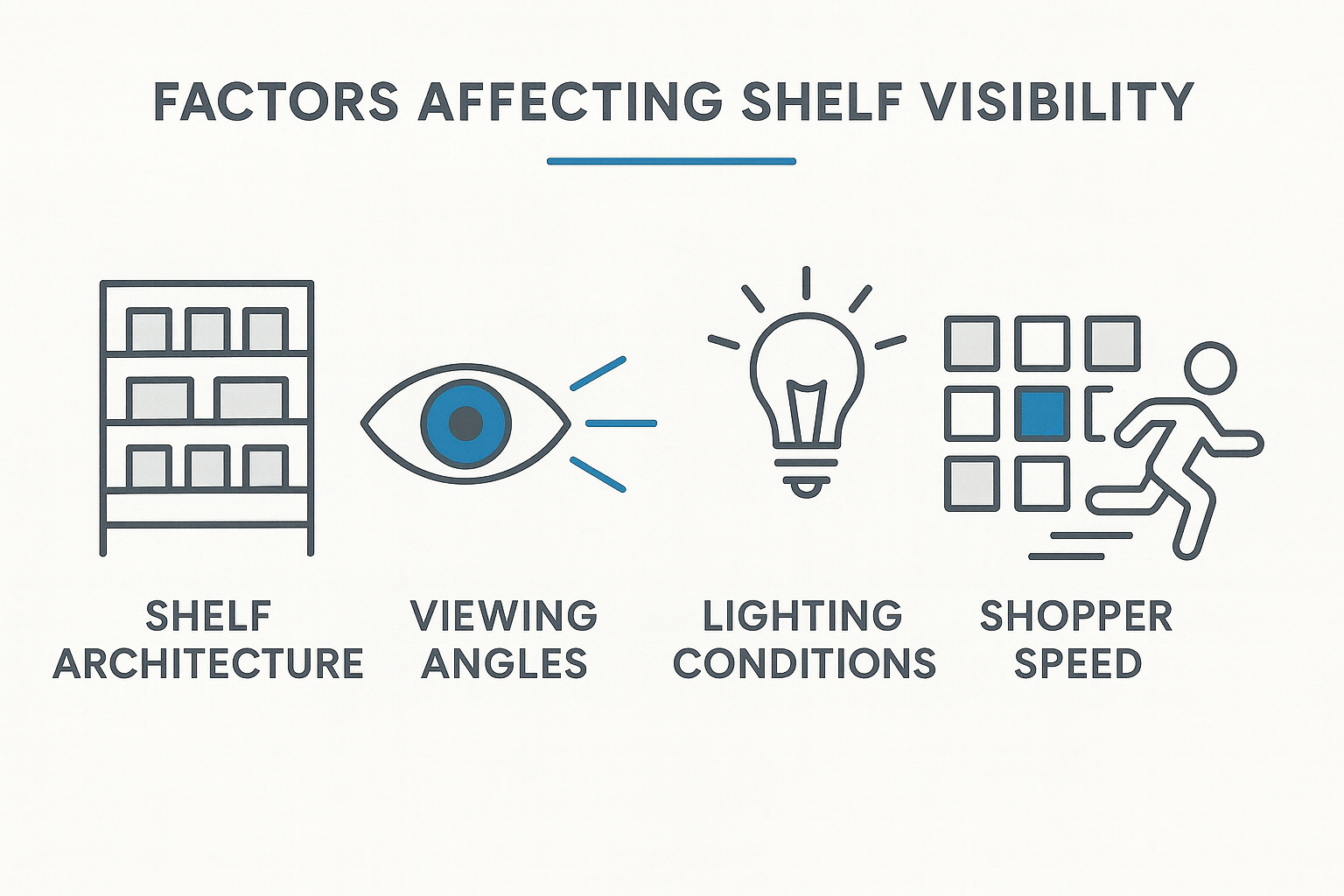
1. Shelf Architecture and Category Layout
The structure of the planogram significantly affects detection. Research from NielsenIQ indicates that shelf complexity and SKU density reduce the number of products a shopper can visually process during a single pass. In categories with high assortment density—beverages, cosmetics, confectionery—products require stronger visibility cues to be detected reliably.
2. Viewing Distance and Navigational Flow
Shoppers rarely encounter shelves head-on. As documented in the Journal of Consumer Behaviour, most store navigation happens at oblique angles, with limited stopping distance. Products must therefore activate visibility across multiple approach paths, not only front-facing views.
3. Light-Environment Variability
Retail lighting is unpredictable. Studies from the Illuminating Engineering Society (IES) show that ceiling-mounted LED systems often create uneven light distribution, shadow zones, and strong directional glare. In refrigerated aisles, reflective packaging and glass further distort visibility. This effect is consistent with findings from our work on how light influences purchasing decisions.
Shelf-visibility therefore collapses not because packaging is inadequate, but because environmental conditions exceed the limits of print.
4. Competitive Density and Block Behavior
Visibility is contextual. A product’s detectability depends not only on its design but on the visual similarity of its neighbors. When competing items share packaging silhouettes, brand colors, or finish textures, the entire block becomes visually flattened. A similar effect appears in sensory packaging, where overlapping visual cues reduce distinctiveness.
5. Shopper Speed and Cognitive Load
According to APA consumer cognition research, modern shoppers exhibit reduced working-memory allocation in stores. They process fewer visual details, move faster through aisles, and rely heavily on rapid scanning rather than deliberate evaluation. Visibility today is about delivering immediate clarity under cognitive pressure.
AI-Based Shelf Modeling and Noticeability Scores
Retailers are beginning to run simulation-driven planograms using computer-vision tools such as Trax Retail and Pensa Systems. These models generate noticeability scores—predictive measures of how often a product will be visually identified based on shelf positioning, lighting, and competitive arrangement.
McKinsey’s analysis of AI in retail execution emphasizes that such data-driven planograms will soon become a standard negotiation factor between brands and retailers.
Micro-Attention Optimization
As shown in industry research from SymphonyAI, large POS displays are declining in efficacy while micro-attention cues—small, shelf-level signals aligned with natural eye movements—are gaining traction. Effective visibility will come from subtle, condition-agnostic cues rather than oversized promotional structures. These subtle signals share similarities with personalized light packaging, where illumination enhances detection without adding visual noise.
Responsive Packaging for Difficult Environments
Future packaging will compensate for environmental volatility rather than relying on retailers to provide optimal visibility conditions. This will be essential in segments where lighting is particularly inconsistent, such as convenience stores, night venues, and airport retail.
Sustainability as a Driver of POS Transformation
Retailers are decommissioning plastic-heavy POS materials due to cost and regulatory pressure. Reports from the National Retail Federation (NRF) show a rapid shift toward lightweight, low-energy visibility systems. Packaging must provide visibility without generating operational friction or waste.
Shelf-visibility challenges vary by retail context.
1. Beverage Aisles in Supermarkets
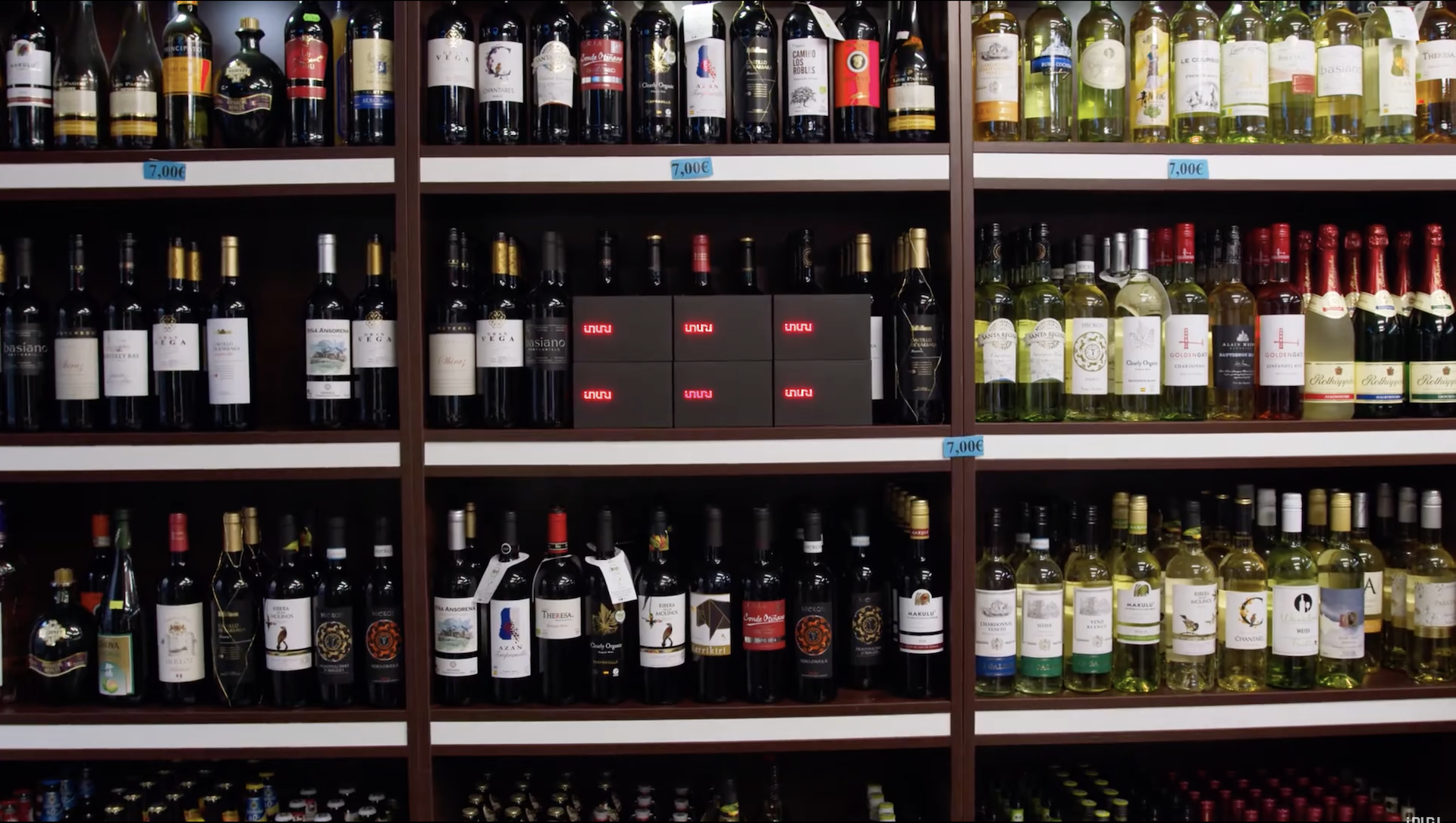
Tobii Pro’s aisle studies reveal that shoppers often detect only the first two or three facings when approaching from a diagonal angle. High SKU density makes peripheral clarity essential. In trials using printed OLED elements, products remained identifiable even in low-light aisle edges where luminance drops sharply.
2. Duty-Free and Airport Retail
Airport stores combine reflective cabinetry, glass, and spotlighting. According to retail design analyses published by Philips Retail Lighting, such conditions reduce print readability. Products with stable visibility cues maintain their presence in environments where glare otherwise overwhelms detail.
3. Night-Environment Retail (Bars, Clubs, Hotels)
Here, visibility is often functionally compromised. Lighting levels drop below thresholds where print remains legible. Industry case reviews from IES show that in such settings, even minimal self-activating cues dramatically improve first identification.
Across all channels, one principle holds: when environmental volatility increases, print-only visibility becomes unreliable.
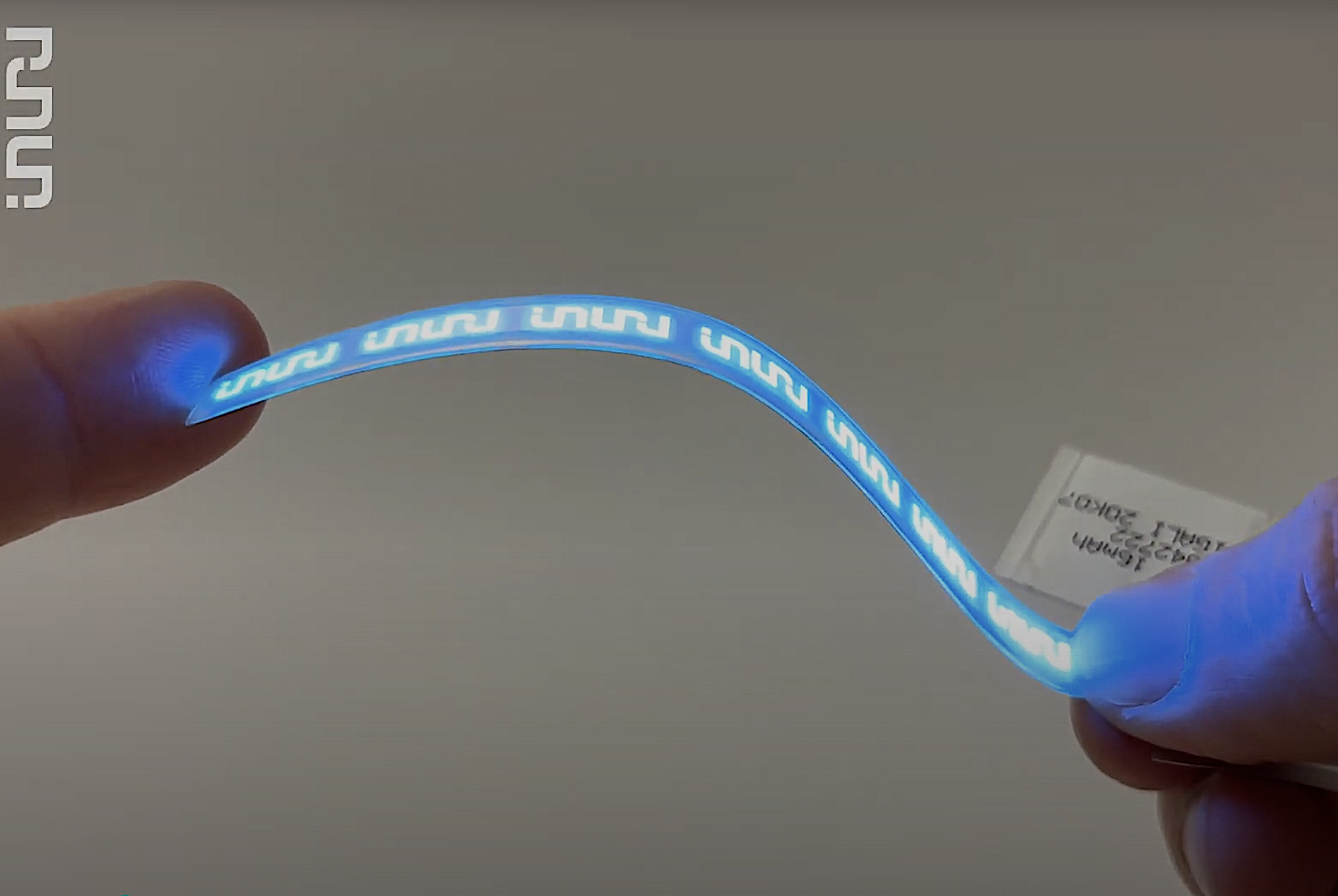
Printed OLEDs introduce visibility stability rather than sensory engagement. Their function is structural: They provide a consistent luminance signature that compensates for poor environmental conditions.
Unlike LEDs—which create directional hotspots—printed OLEDs emit uniform luminance across the surface. Research confirms that flexible OLEDs maintain clarity across wide viewing angles, making them effective during diagonal shelf approaches.
Key advantages include:
Printed OLEDs restore findability where print loses reliability.
By 2030, shelf-visibility will shift from aesthetic packaging design to a measurable retail science discipline. The evolution will be defined by:
Printed OLED technology aligns naturally with this trajectory because it provides a visibility signature that remains stable in environments where traditional packaging loses clarity.
In complex, fast-moving retail contexts, visibility will increasingly belong to products that maintain clarity under pressure—not those that rely on ideal conditions.
Want to improve your product’s shelf visibility? Contact us.
Q1: What is shelf-visibility?
Shelf-visibility is a retail performance metric reflecting how quickly and reliably a product becomes visually identifiable within its category block, influenced by shelf layout, lighting, viewing angles, and competitive density.
Q2: Why is shelf-visibility important for retail?
Because most shoppers scan categories rapidly, products that are detected first have a higher probability of being selected, giving visibility a strategic role in product discovery and sales outcomes.
Q3: What factors influence shelf-visibility today?
Factors include planogram structure, shopper approach angles, inconsistent lighting conditions, competitive crowding, and cognitive processing speed during visual scanning.
Q4: How will shelf-visibility evolve by 2030?
It will shift toward data-driven planogram simulations, AI-based noticeability scoring, micro-attention cues embedded in packaging, and technologies that compensate for unpredictable store lighting and conditions.
Q5: Can printed OLED technology improve visibility?
Yes — printed OLEDs provide stable luminance signatures that help products remain identifiable regardless of ambient lighting, enhancing findability even in low or uneven light conditions.
Q6: How does shelf-visibility relate to consumer behavior?
Higher visibility aligns with cognitive ease and rapid recognition during initial scanning, increasing the likelihood of consumer attention, engagement, and subsequent purchase consideration.
Last Updated: December 2025
SOURCES:
(1)https://www.sciencedirect.com/journal/journal-of-retailing
(2)https://nielseniq.com/global/en/insights/
(3)https://onlinelibrary.wiley.com/journal/14791838
(4)https://www.mckinsey.com/industries/retail/our-insights
(5)https://environment.ec.europa.eu/index_en
(6)https://www.sciencedirect.com/science/article/abs/pii/S0022435924000368
(7)https://repository.rit.edu/cgi/viewcontent.cgi?article=1223&context=japr
(8)https://www.quirks.com/articles/enhancing-shelf-visibility-ai-and-marketing-research
(9)https://www.tobii.com/learn-and-support/scientific-publications
(10)https://ies.org/
(11)https://www.symphonyai.com/wp-content/uploads/AI-Economic-Impact-Case-Studies_Retail.pdf
.svg)


